

Railway Mutton Curry Recipe | Colonial Recipe | Mutton Recipe | Kitchenstagram
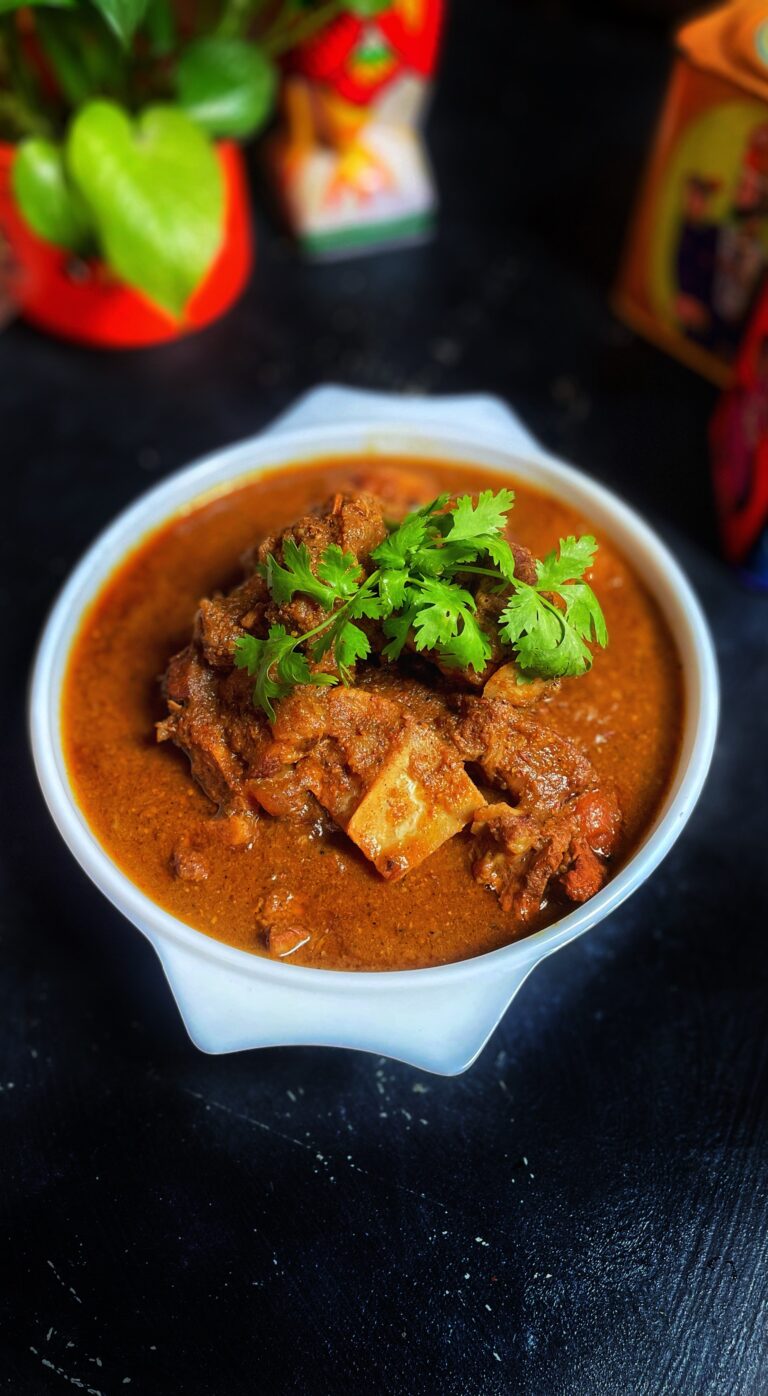
Few Indian dishes capture the spirit of travel quite like Railway Mutton Curry. It is not merely a preparation of meats and spices, but a reminder of an era when journeys by train were filled with charm, anticipation and shared experiences. The dish evokes a time when food was inseparable from the rhythm of the rails and the stories carried between destinations.
Its origins trace back to the days of British Raj, when the expanding railway network transformed how people moved across the subcontinent. British passengers, accustomed to milder flavours found traditional Indian curries too intense. Railway cooks known as Khansamas, responded with ingenuity. They crafted a gentler version of mutton curry- less fiery yet still aromatic- by carefully balancing spices and adding a touch of tang through tamarind. Tamarind was originally used to extend its shelf life. Slow cooking allowed the flavours to deepen without overwhelming the palate, resulting in a dish that was both comforting and approachable.
What makes Railway Mutton Curry unique is its harmonious blend of influences. Fragrant whole spices like cinnamon, cloves and bay leaf are paired with classic Indian ingredients such as ginger, garlic, cumin and coriander. Tamarind was originally used to extend its shelf life.
Traditionally, the mutton is cooked until tender and then simmered in a flavourful gravy that develops depth over time. Mustard oil and fennel often enhance its aroma, while the slow cooking process ensures every bite is infused with layered spices.
As train travel flourished, this curry became a familiar companion on long journeys. It was served in dinning cars to first-class passengers and in station refreshment rooms to travellers from all walks of life. Whether presented neatly with bread rolls or ladled generously onto plates with rice, it offered warmth and satisfaction. The inviting aroma often drifted across platforms, tempting passengers to step down during brief halts for a quick, memorable meal.
Over time, the Anglo-Indian community embraced the curry and made it their own. It fit naturally into their culinary style, which blended Indian spices with European sensibilities. Home cooks introduced their own touches- some added potatoes, carrots or pickled onions, others adjust the sour notes or spice levels. Each household developed a slightly different version, preserving the essence of the dish while allowing it to evolve.
With Independence and changing food systems, the classic railway menu began to fade. Regional cuisines took center stage and many Anglo-Indian dishes gradually disappeared from official train services. Yet Railway Mutton Curry did not vanished entirely. Its memory lingered, kept alive by families and a handful of restaurants that continued to serve it as a nod to the past. In cities known for their Anglo-Indian heritage, it remains a nostalgic favorite. Today it is enjoyed as a comforting main course, best paired with steamed rice or Indian breads like roti or naan. Whether prepared in a pressure cooker or a modern appliance, Railway Mutton Curry continues to carry the legacy of its origin- simple, aromatic and timeless.
What made Railway Mutton Curry truly special was the environment in which it was enjoyed. Meals were not rushed, they unfolded alongside the movement of the train. The clatter of wheels, passing scenery and conversations with fellow travellers added an intangible richness to the experience. The dish became part of the journey itself, shaped by the sense of motion and discovery. It brings back images of old stations, steaming locomotives and the excitement of journeys yet to unfold. Even today, a single serving can transport one back to those moments, where food and travel blended seamelssly.
Storage Tips:
Transfer any remaining curry to a sealed container once it cools completely. Keep it chilled and consume within a few days for best taste. While reheating, warm it thoroughly on the stovetop or in the microwave, adding a splash of water if the gravy has thickened too much.
Ingredients:
For Masala:
1 heaped tbsp Coriander seeds
2 tbsp Black Peppercorn
2 tsp Fennel seeds
1 no. Black Cardamom
4 nos. Green Cardamom
1 inch Cinnamon, broken
For Mutton Marination:
1 kg Mutton
1 tsp Turmeric Powder
1 1/2 tbsp Prepared Masala
1 heaped tbsp Ginger Garlic Green chili paste
2-3 tbsp Mustard Oil
For Railway Mutton Curry:
4 tbsp Mustard Oil
5 nos. Potatoes, peeled & diced
2 tsp Turmeric powder
Salt to taste
2 nos. Bay leaf
1 tsp Cumin Seeds
1 no. Black Cardamom
2 nos. Green Cardamom
1 inch Cinnamon, broken
5-6 nos. Clove
5 nos. Onion, sliced
Marinated Mutton
1 tsp Turmeric powder
1 tsp Coriander powder
1 cup Fresh Tomato Puree
Remaining Prepared Masala
1 tbsp Tamarind Paste
Fresh Coriander sprig, for garnish
Preparation:
For Masala:
- Step 1: Heat a heavy bottom frying pan on medium low heat and add the spices to the pan. Dry roast the spices on low heat, stirring continuously, for about 5 minutes. At this point you should be able to smell the fragrance of the spices. Turn off the flame.
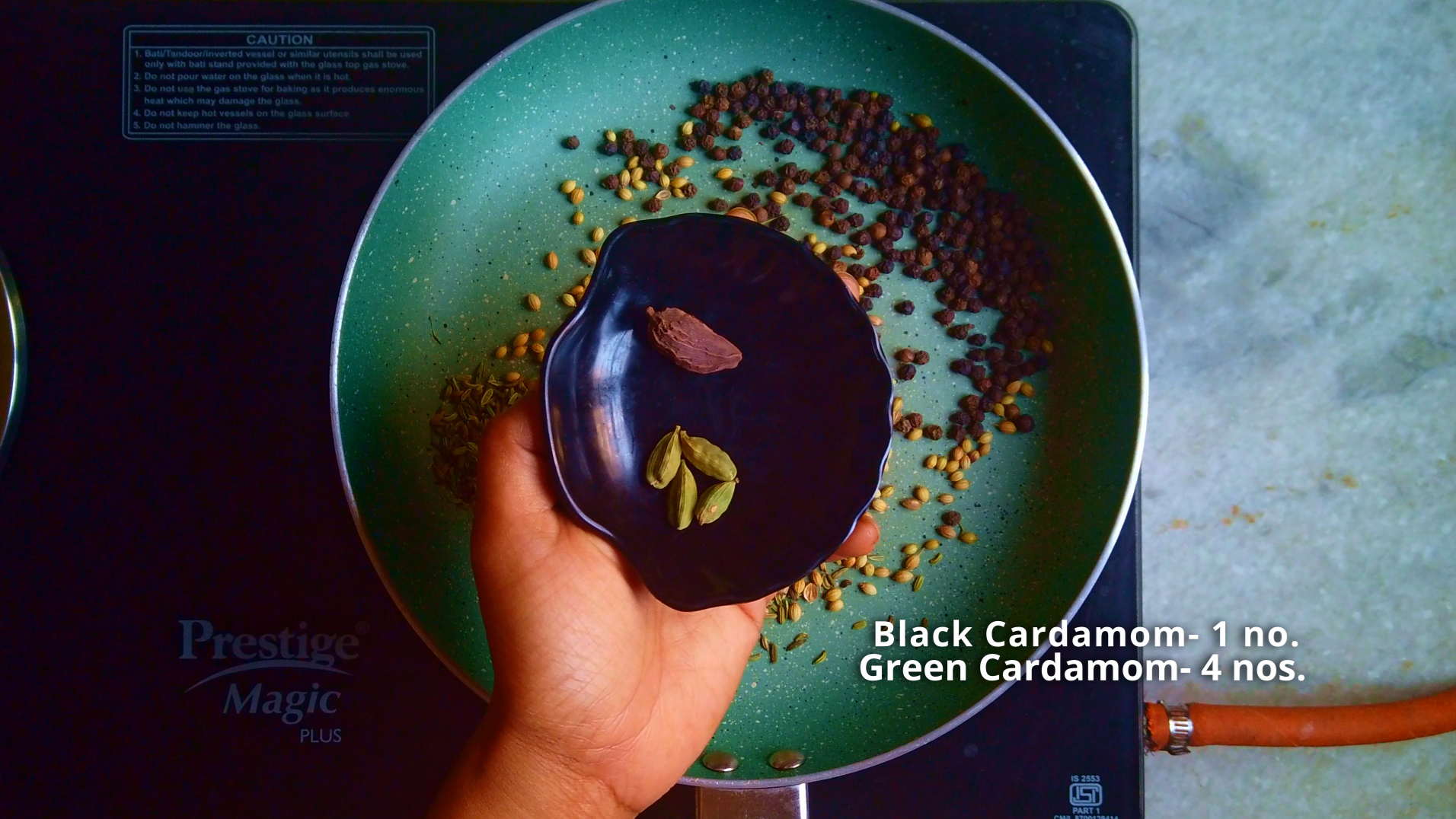
- Step 2: Allow the spices come to room temperature. Next transfer the toasted spices to a grinder and blitz them till you have a fine powder.

For Mutton Marination:
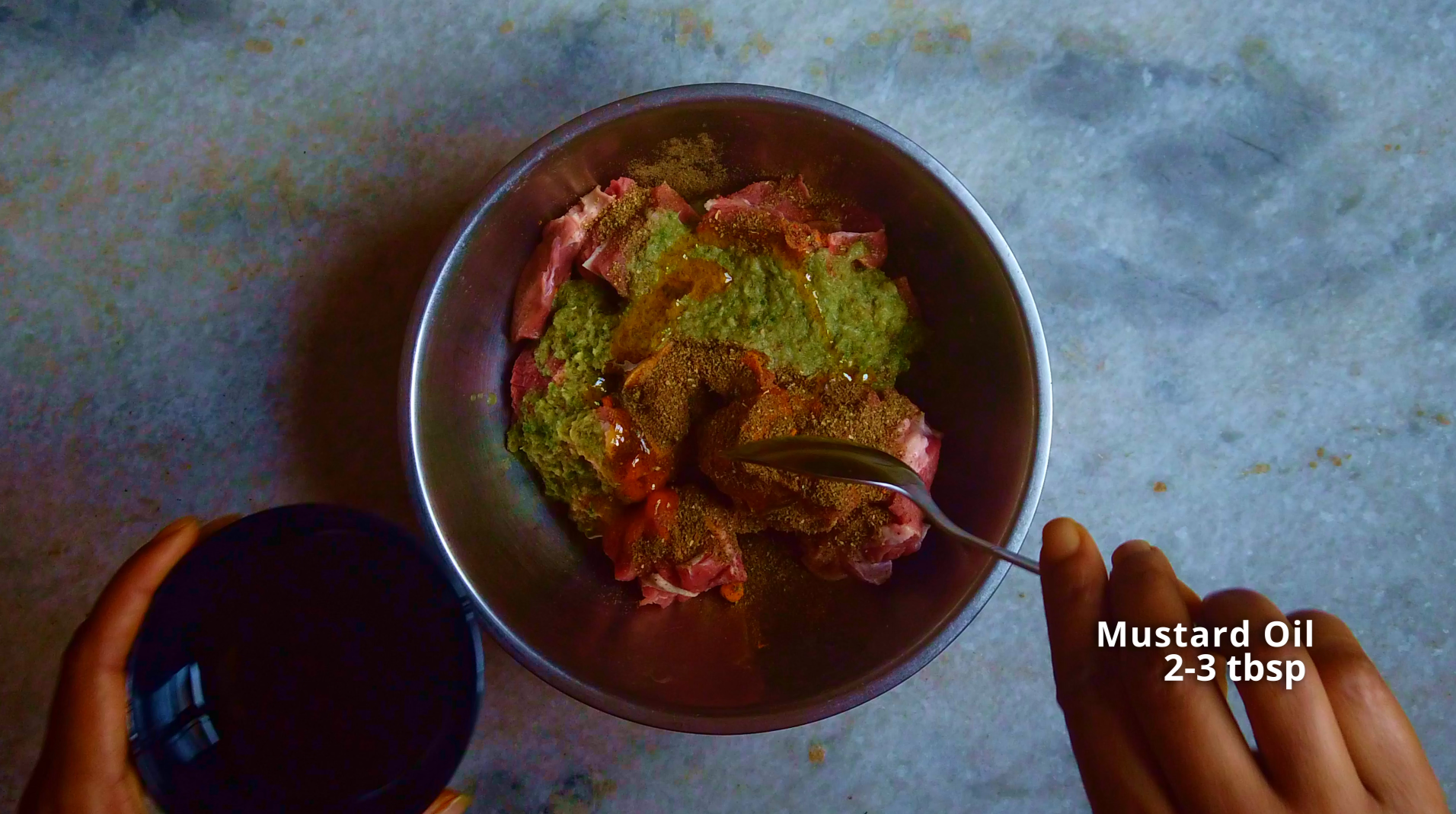
- Step 3: In a large mixing bowl, add mutton, prepared masala, ginger-garlic-green chili paste, turmeric powder and mustard oil, mix everything properly. Marinate the mutton for minimum 1 hour or overnight. I prefer to do overnight marination.
For Railway Mutton Curry:
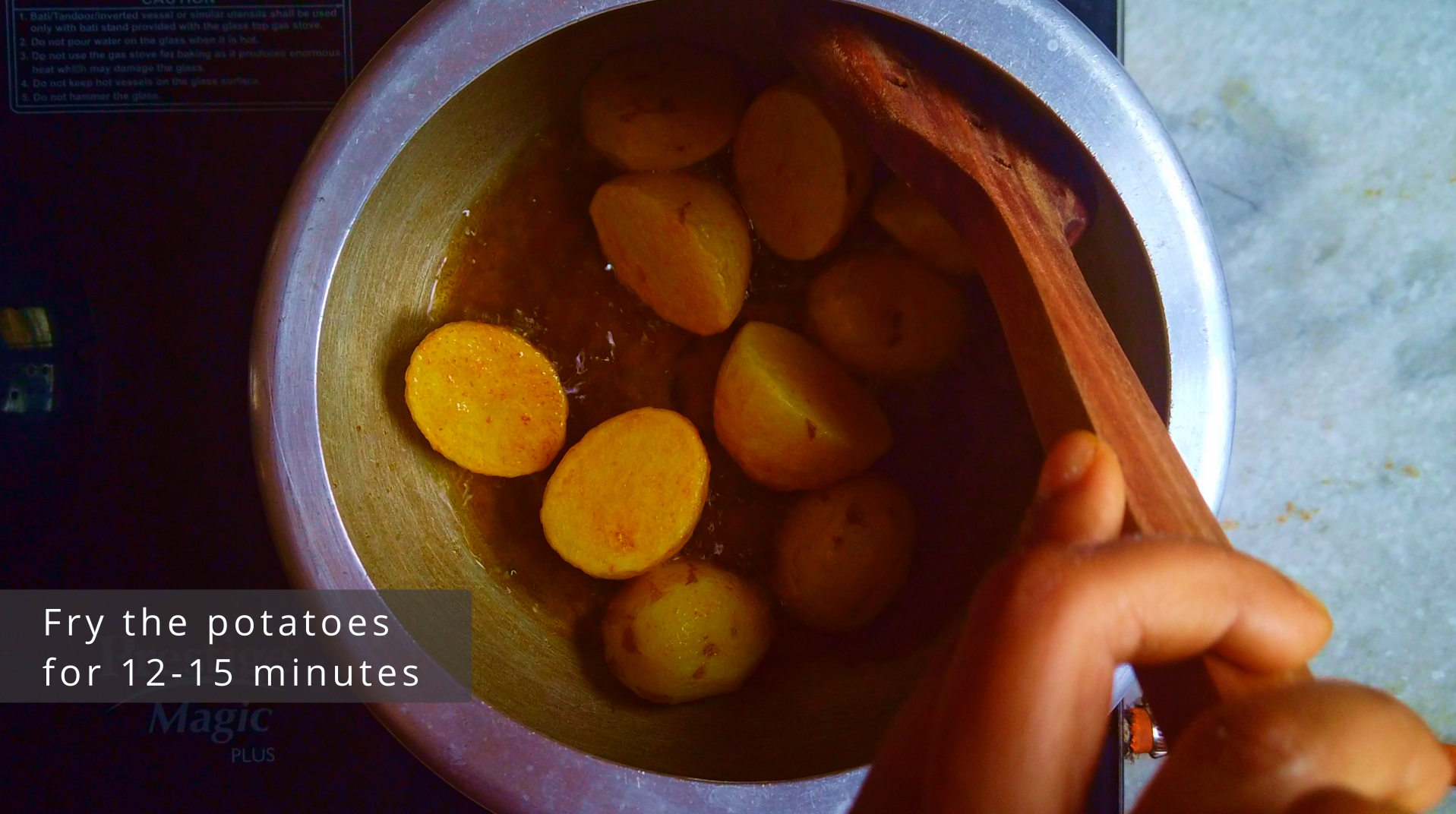
- Step 4:In a pressure cooker, add 4 tbsp mustard oil and heat the oil. Fry the potatoes by adding salt and turmeric powder, cook on medium heat for 6-8 minutes then flip each potato and let the potatoes cook for 6-8 more minutes, remove from the oil and keep aside the cooked potatoes.
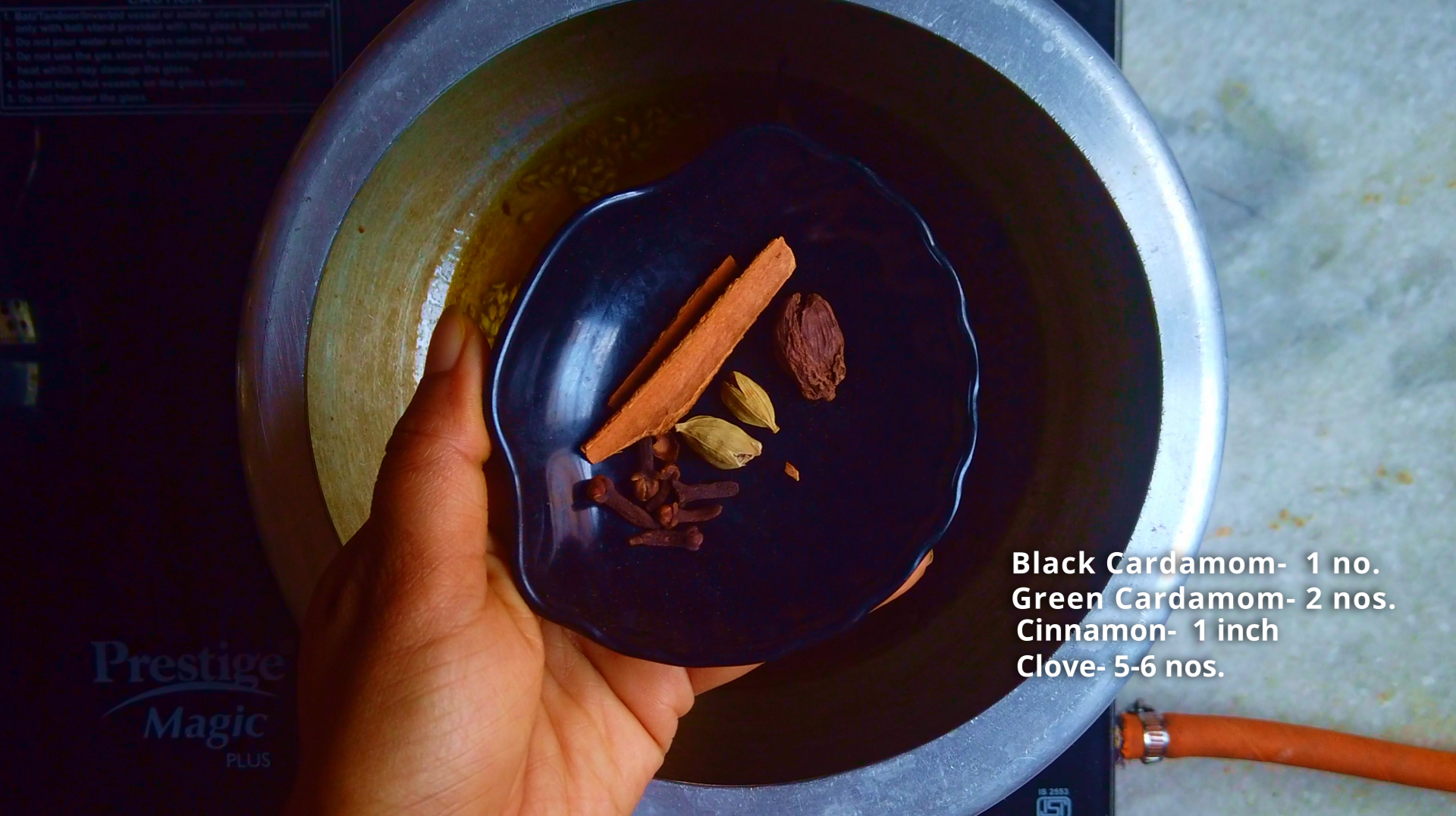
- Step 5: In the same oil, add bay leaf, cumin seeds, black cardamom, green cardamom, cinnamon and clove, allow them to splutter.
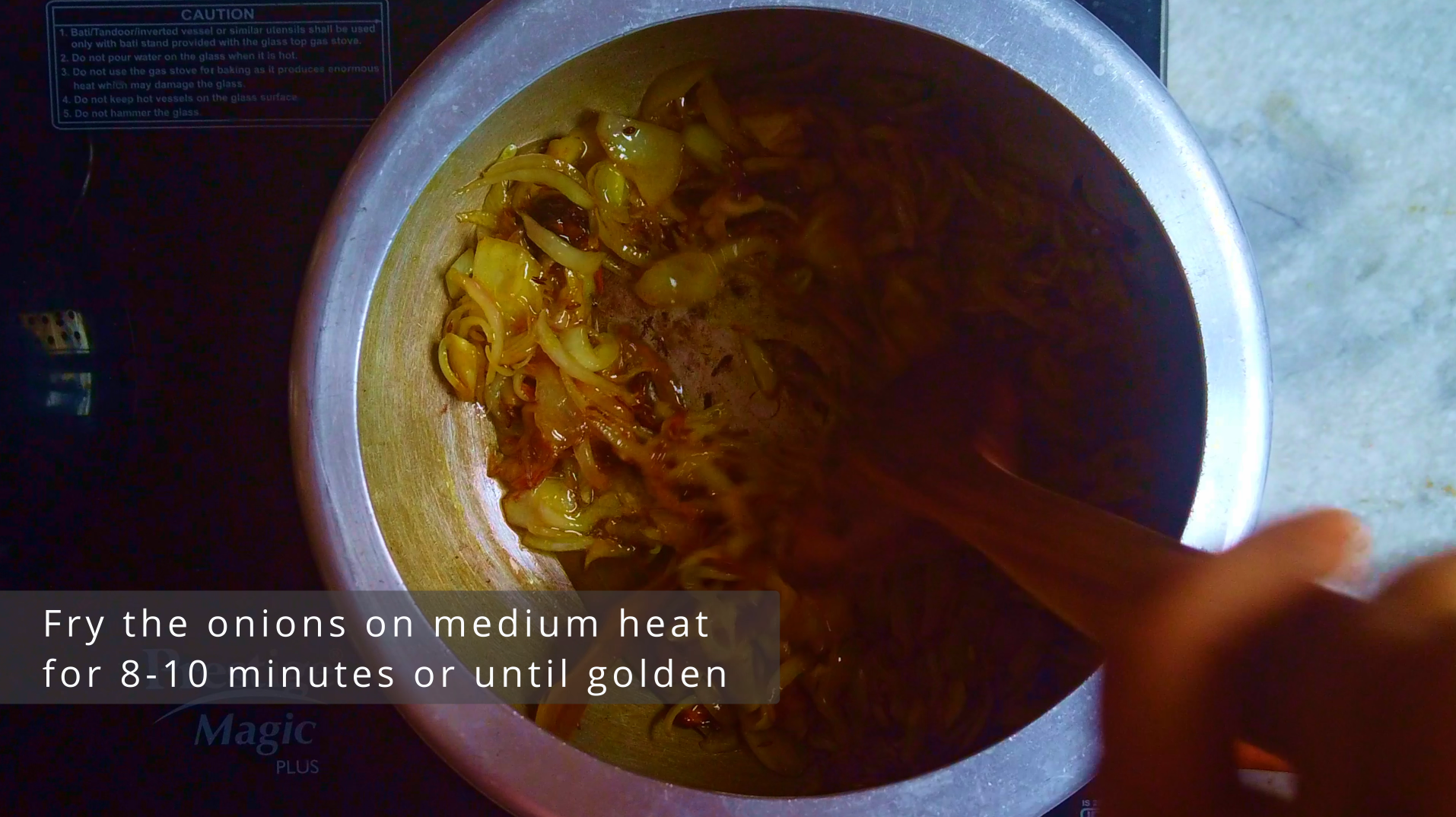
- Step 6: Then add sliced onions and 1 tsp salt, adding salt to the onions while frying them helps to extract moisture out of the onions and caramelization happens faster. Fry the onions on medium heat for 8-10 minutes or till they have become golden.
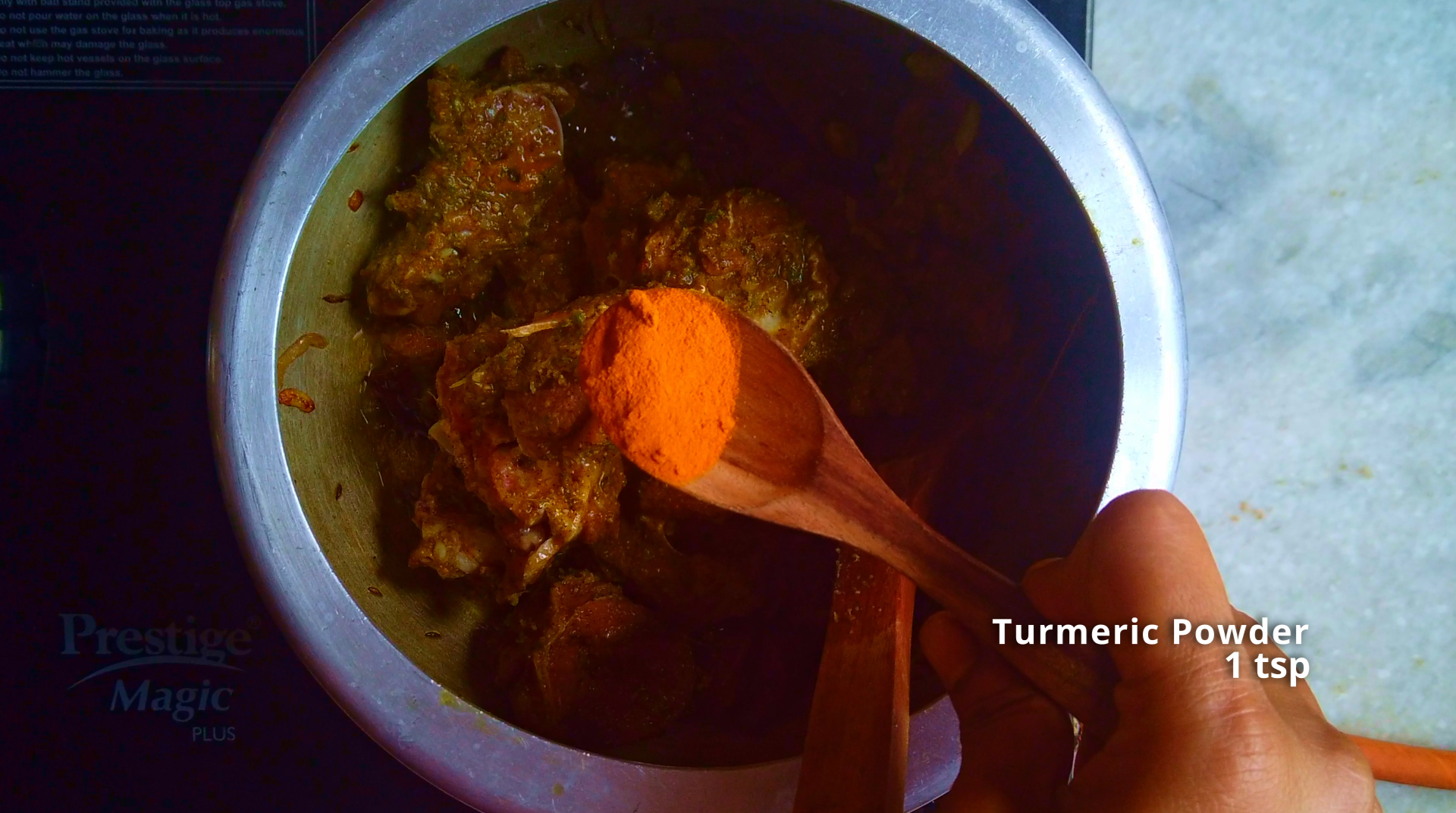
- Step 7: Next add the marinated mutton and turmeric powder, saute for 6-8 minutes on medium heat. Add coriander powder, saute for few more minutes.
- Step 8: Add the tomato puree and cook for 8-10 minutes on medium high heat.

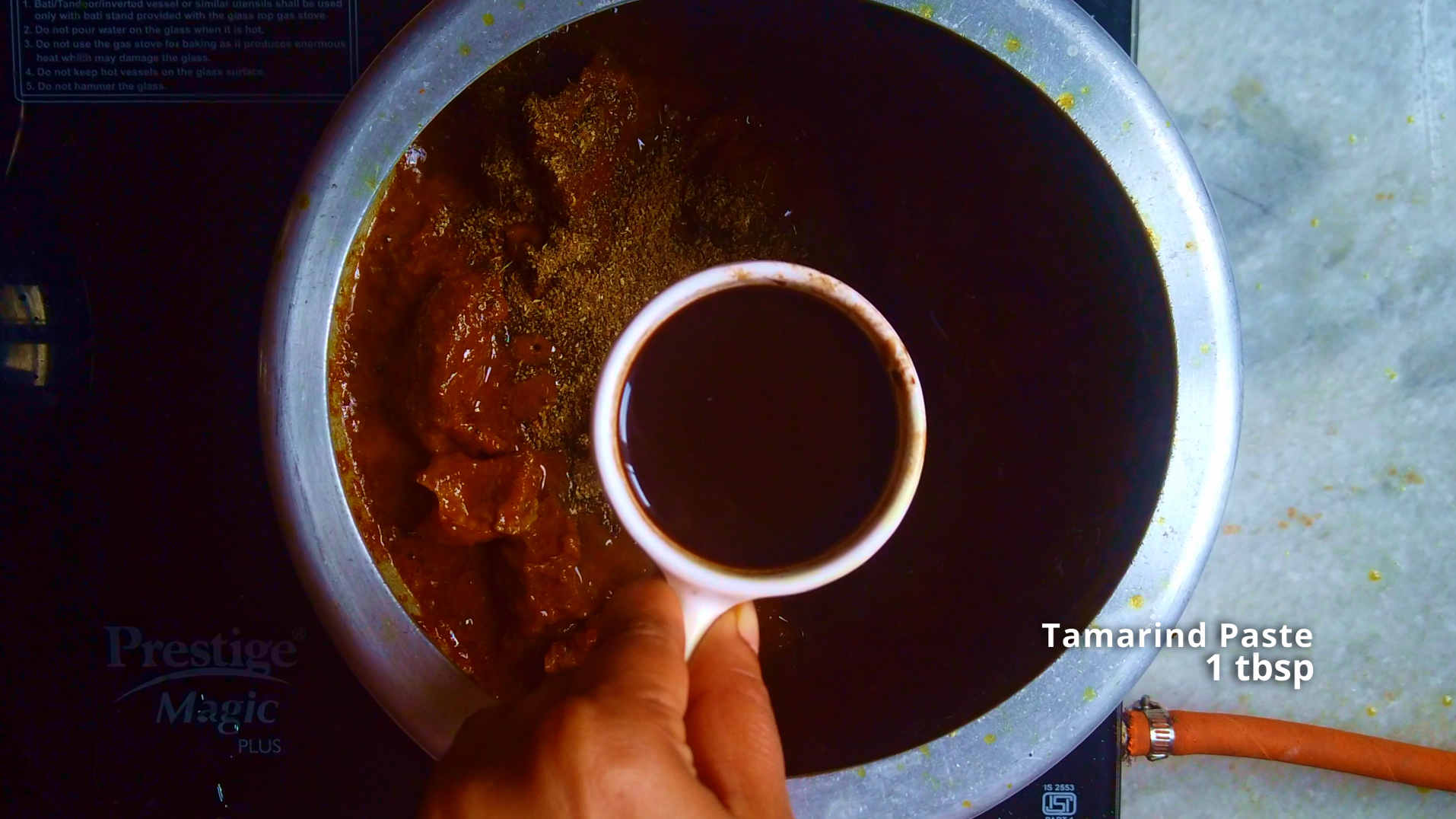
- Step 9: Add prepared masala and tamarind paste, stir to combine and continue to cook for 4-5 more minutes.
- Step 10: Next add the fried potatoes and hot water, stir to combine everything properly.
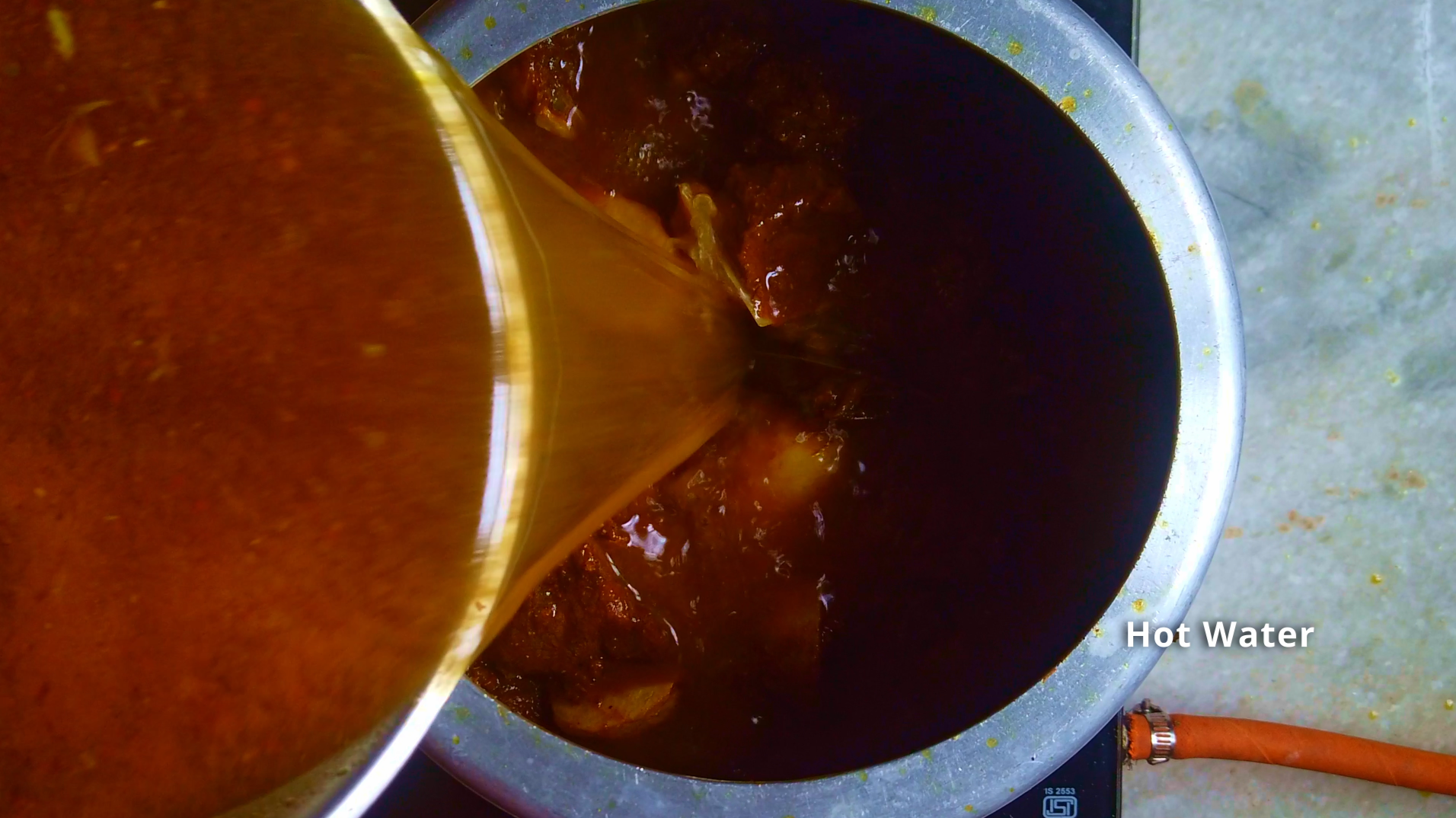
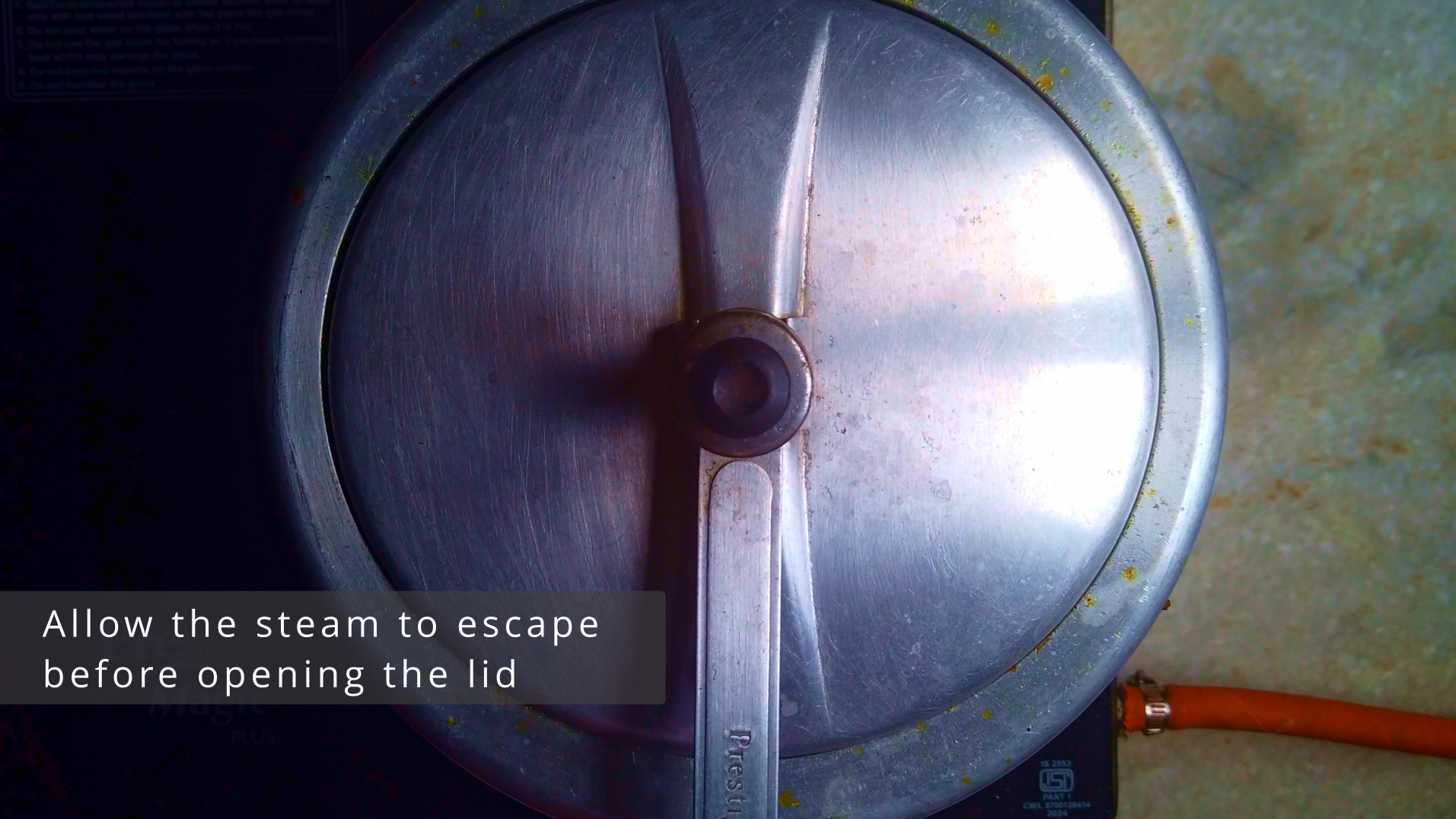
- Step 11: Pressure cook for 6-7 whistles, on medium-high heat. Allow the steam to escape before opening the lid, keep aside.
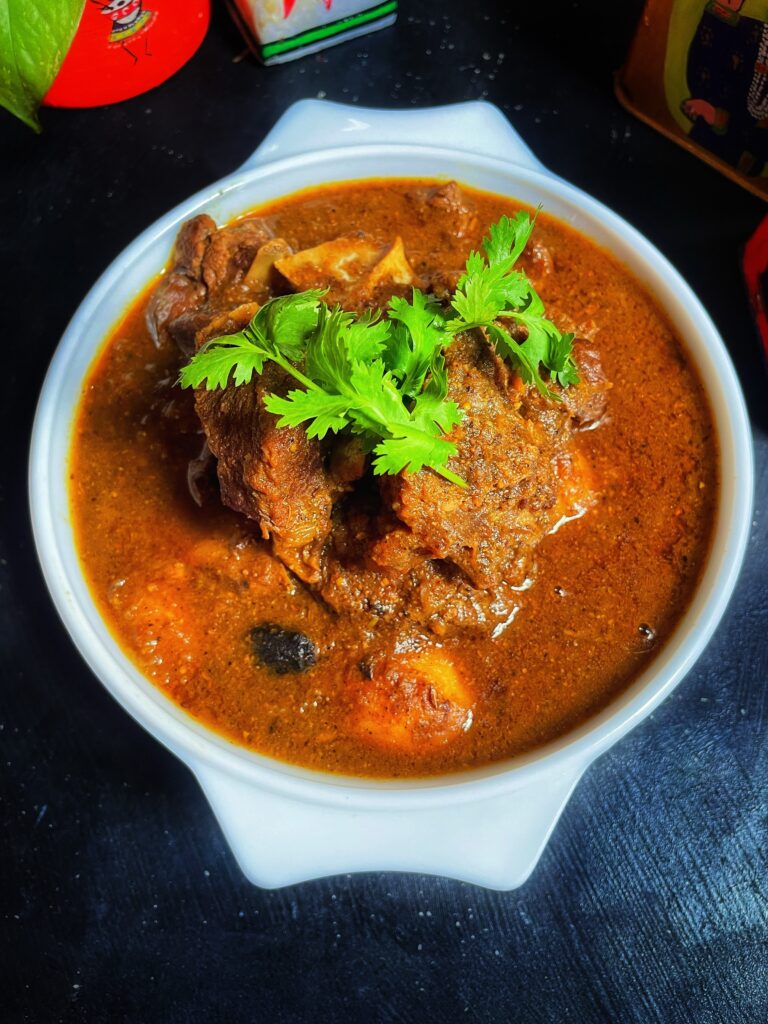
- Step 12: Garnish with fresh cilantro sprig. Serve hot with rice, bread, bread rolls, paratha or naan. Enjoy!!
About Me

DEBJANI MONDAL
Welcome to Kitchenstagram, the home of delicious recipes, culinary inspiration and cooking adventures. I’m Debjani and I’m thrilled to be your guide through the wonderful world of food. I’m a self-taught professional baker, home chef, recipe developer, author of Kitchenstagram and an aspiring YouTuber.
My passion for food and cooking began at a very young age, when I would watch my mom and dad cook for me and my brother. My dad, in particular is a great cook whose culinary skills made a lasting impression on me. My dad would cook up a storm on special occasions by cooking variety of dishes, from delicious biriyani to samosa, fish fry, rasgullas and kachoris (sweet & spicy deep fried pastry with filling of lentils, meat or fish…>>>>>
FOLLOW ME
My Latest Posts
- post 1
- post 2