

Easy Crème Brûlée | Homemade Crème Brûlée Recipe | Kitchenstagram
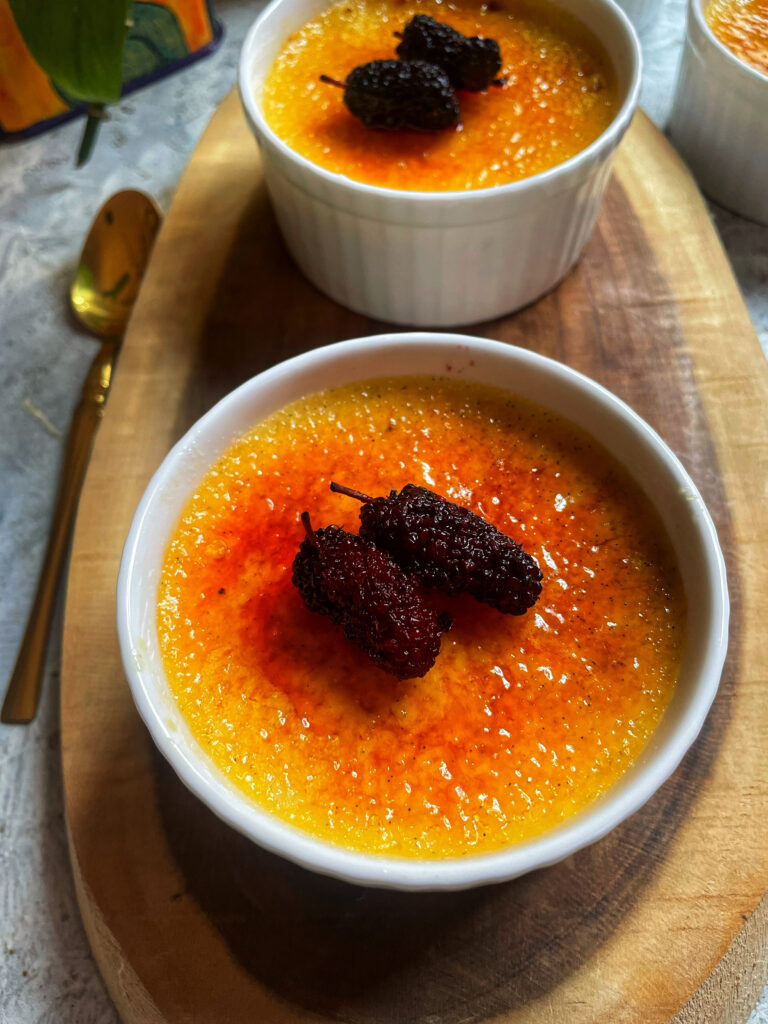
Celebrate Mother’s Day with a touch of elegance- Crème Brûlée, a timeless dessert. Crème Brûlée is one of those magical desserts that effortlessly bridges the gap between elegance and simplicity. Despite its refined reputation and presence on upscale restaurant menus, this French classic is surprisingly easy to make at home- even for beginners. With just a few ingredients and a bit of technique, you can recreate this creamy, indulgent desserts in your own kitchen.
At its heart, Crème Brûlée is a silky, rich custard topped with a delicate layer of crisp, caramelized sugar. The contrast in texture between the smooth custard and the brittle caramel top is part of its irresistible charm. While many assume it’s a complicated dish, it actually only calls for a handful of ingredients-typically cream, egg yolks, sugar and vanilla. That’s it. The secret lies in the method, not the complexity.
The base custard is made by gently heating heavy cream- often infused with vanilla bean or high-quality vanilla extract- then slowly incorporating it into egg yolks and sugar to create a smooth mixture. This custard is then poured into ramekins and baked in a water bath, which ensures even, gentle cooking. Once cooled and set, the real fun begins, layer of sugar is sprinkled on top and caramelized with a kitchen torch, forming the signature crackly topping.
One of the most satisfying aspects of crème brûlée is how forgiving it is when approached with care. The water bath prevents overcooking and curdling, resulting in a custard that’s decadently smooth. Using a kitchen torch might seem intimidating at first, but it’s easy to control and adds a touch of culinary theater- making this a great dessert to serve at dinner parties or special occasions.
Historically, crème brûlée has a rich and slightly debated origin story. While the French term translates directly to “burnt cream,” and the dish is strongly associated with French cuisine, similar versions have appeared in Spanish and English culinary traditions. The earliest written reference dates back to 1691 in Francois Massialot’s cookbook Cuisinier royal et bourgeois, where he describes caramelizing sugar on top of a custard with a red-hot iron- much like the method still used today. Later, it became known in England as “Cambridge burnt cream,” particularly associated with Trinity college, where the college crest was seared into the sugar crust.
Despite its long history, crème brûlée didn’t enjoy mainstream popularity until the late 20th century, when it saw a resurgence in fine dining. By the 1980s, it had become a symbol of indulgence, prized for its balance of richness and subtlety. Since then it has remained a beloved dessert across cultures and cuisines.
What makes crème brûlée especially appealing for home bakers is how adaptable it is. Vanilla is the classic flavour, but you can infuse the cream with other elements- such as citrus zest, coffee, lavender or liqueurs- for a personal twist. It’s also a wonderful make-ahead option, the custard can be prepared and chilled a day or two in advance, then topped with sugar and torched just before serving.
The key to perfect crème brûlée lies in attention to a few simple details. First, always strain your custard mixture before pouring it into ramekins- this removes any bits of cooked egg and ensures a silky texture. Second, be patient with the baking process. The custard should be just set, with a slight wobble in the center when gently shaken. Overbaking can lead to a rubbery texture, while under baking prevents it from setting properly.
And, of course, there’s the caramelized topping- the dessert’s crowning glory. Achieving that perfect glassy finish requires an even layer of sugar and a steady hand with the torch. The goal is a golden, evenly melted crust that shatters under the spoon with a satisfying crack. If you don’t have a kitchen torch, the broiler can work in a pinch, though it requires a bit more vigilance to avoid burning the sugar.
Crème brûlée may feel luxurious, but it’s grounded in simplicity. It’s the kind of dessert that impress guests yet doesn’t demand hours in the kitchen. Whether you’re making it for a romantic Valentine’s Day dinner, a Mother’s Day brunch or just a quiet evening at home, it always feels special. There’s something undeniably joyful about cracking through the caramel top and dividing into the creamy custard beneath- it’s a small ritual that never gets old.
Ingredients needed for Crème Brûlée:
- Heavy Cream: The foundation of the custard , heavy cream or heavy whipping cream delivers the rich, luxurious texture Crème Brûlée is known for. Avoid using milk or light cream as they compromise the silkiness and flavour.
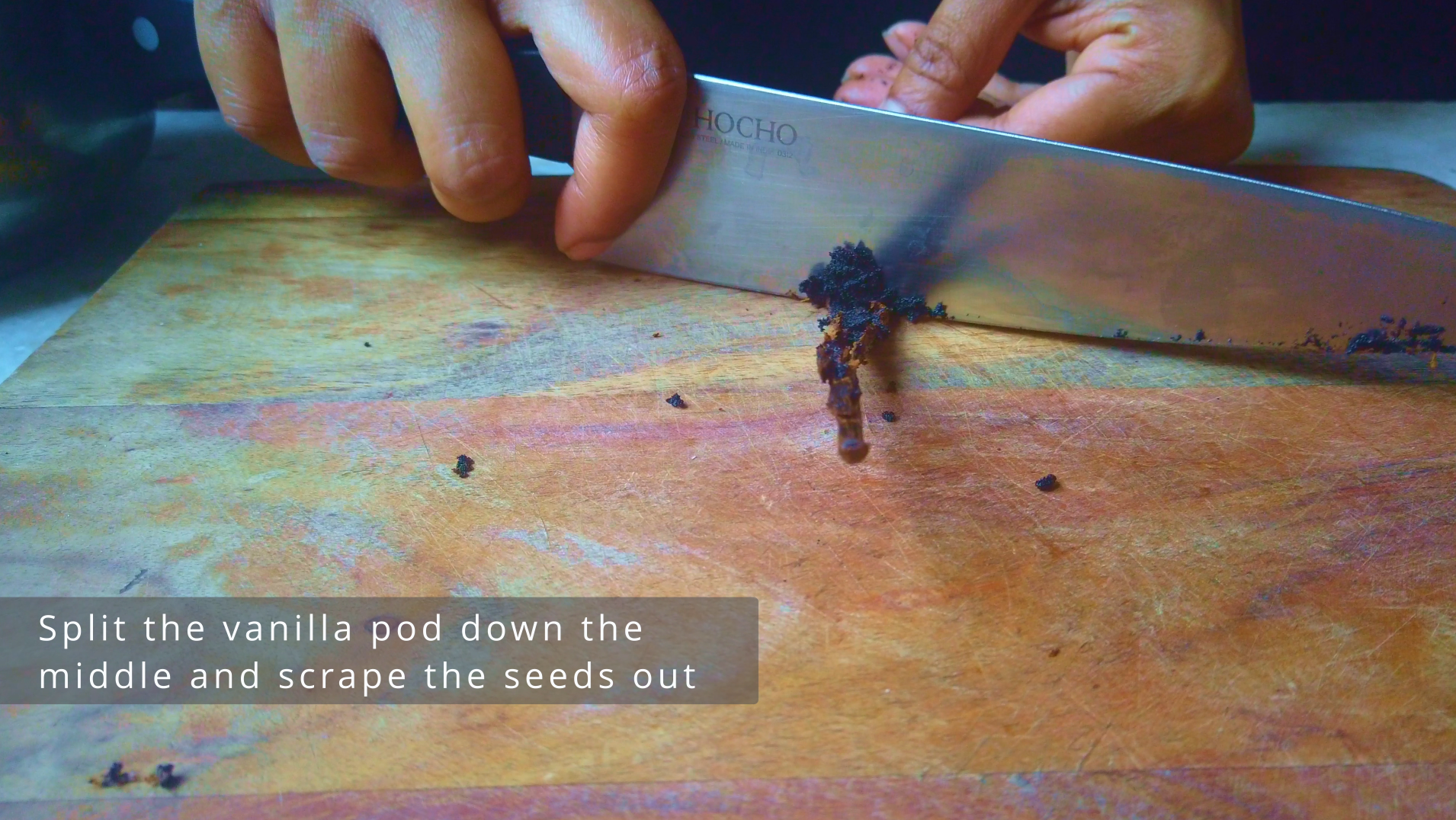
- Vanilla: Vanilla bean offers the purest, most intense vanilla flavour along with classic black specks in the custard. To use vanilla bean, split the bean and scrape out the seeds. Vanilla bean paste is a great alternative with similar look, though slightly milder in flavour. Vanilla extract can be used but they are less aromatic.
- Sugar: use castor sugar for smooth blending. Sprinkle a thin, even layer before caramelizing to get that signature crisp, glass like crust.
- Egg yolks: Egg yolks create the custard’s body and velvety texture. Rich and smooth, yolks are what allows the dessert to set properly. Save the egg whites for recipes like meringue or freeze for future use.
Serving suggestions:
Crème Brûlée is a luxurious dessert that pairs beautifully with a variety of dishes, especially if you’re creating a French inspired menu. To complement its silky richness and crisp caramel top, consider starting your meal with something classic like French Onion Soup or refreshing salad- ideal for lighter, summery option.
For festive occasions, Crème Brûlée makes a perfect finish after roasted chicken. Garnish each serving with fresh mulberries or strawberries for touch of elegance and colour. No matter how you serve it, Crème Brûlée brings a note of sophistication and satisfaction to any menu, making it an ideal conclusion to both casual dinners and celebratory feasts.
Storage Tips:
- Refrigeration: To store leftover set custard, let it cool slightly before loosely covering and refrigerating for two days. Before serving, gently blot any surface moisture with a paper towel. Sprinkle sugar on top and caramelize with a torch just before serving for the best texture and flavour.
- Make-ahead: Crème Brûlée is ideal for make-ahead prep, you can prepare the custard up to three days early and keep it covered in the fridge. Just hold off on torching the sugar topping until right before serving- this keeps it crisp and perfectly caramelized, as refrigeration can cause it to lose its signature crunch.
Ingredients:
1 kg Chicken, bone-in & skin-on
1 tsp Salt
1 tsp Freshly Cracked Black pepper
2 tsp Paprika powder
- Fresh Mulberry, for garnish
Preparation:
- Step 1: Split the vanilla pod down the middle and scrape the seeds out using a knife.
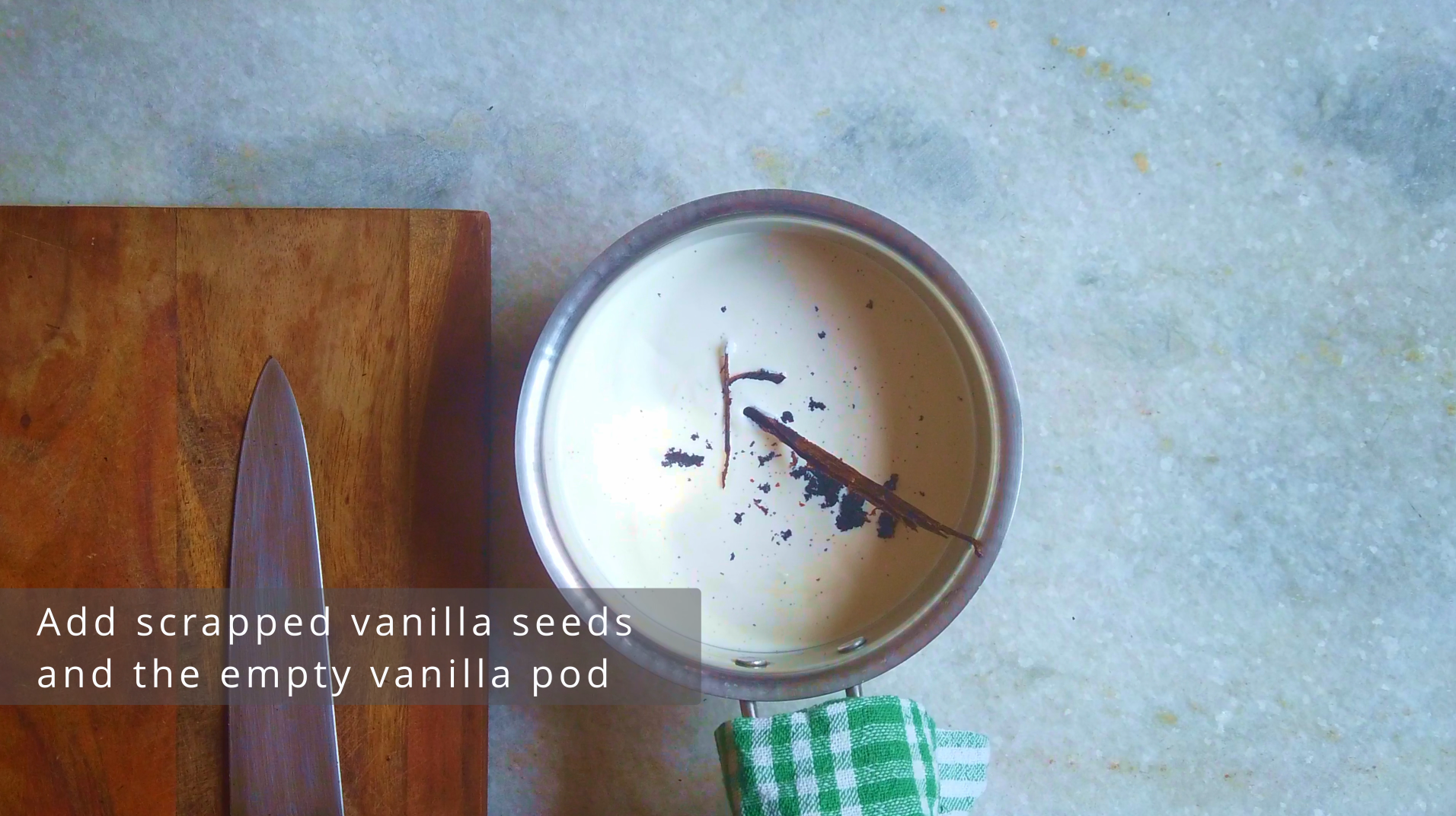
- Step 2: In a saucepan add heavy cream and scrapped vanilla seeds and the empty vanilla pod.
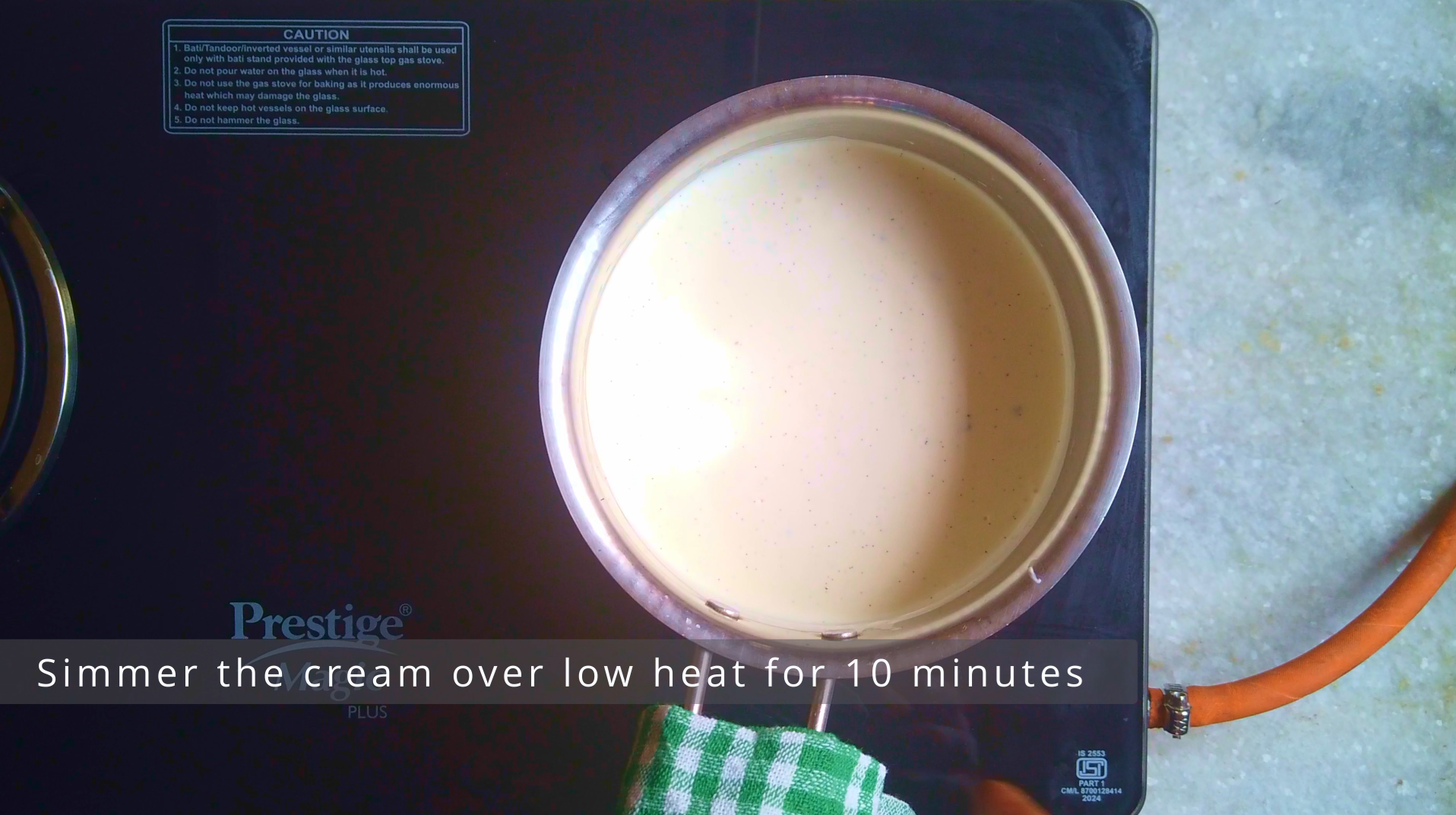
- Step 3: Simmer the cream over low heat for 10 minutes. Remove from stove and set aside to infuse for 1 hour.
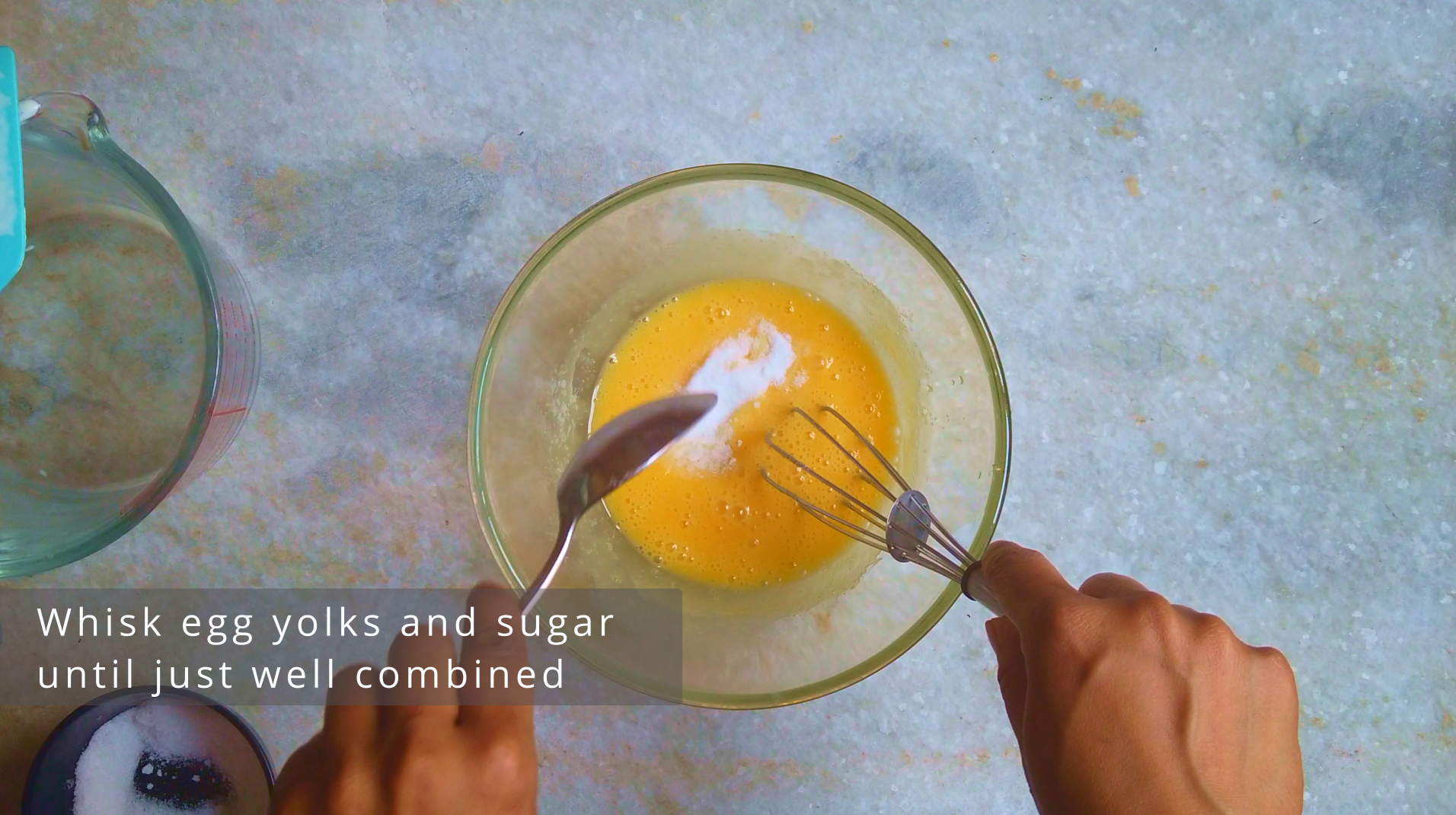
- Step 4: Meanwhile, separate egg yolks and reserve the whites for future use. Whisk egg yolks and sugar until just well combined.
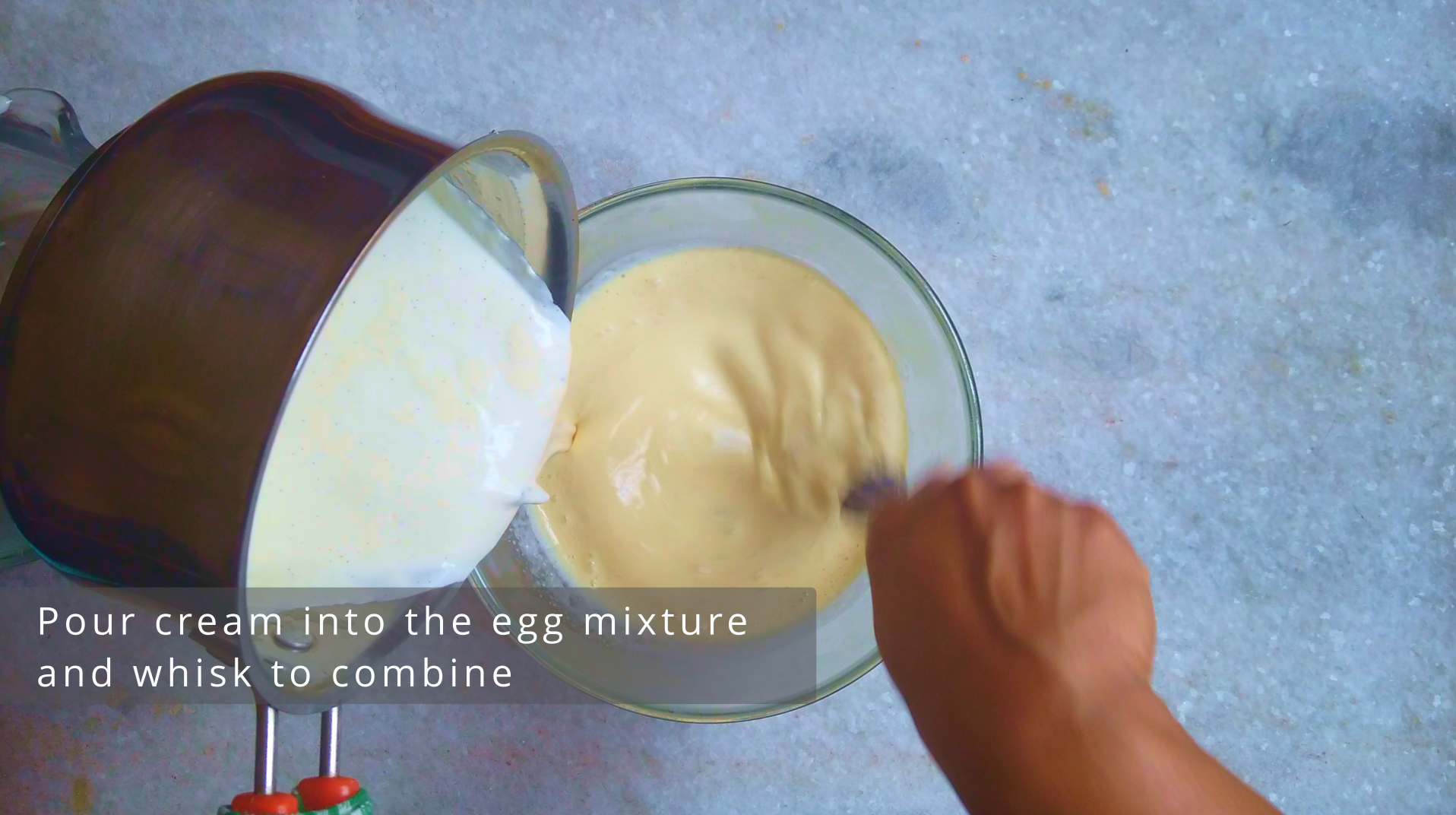
- Step 5: Pour cream into the egg mixture and whisk to combine. Strain the mixture through a fine mesh sieve.
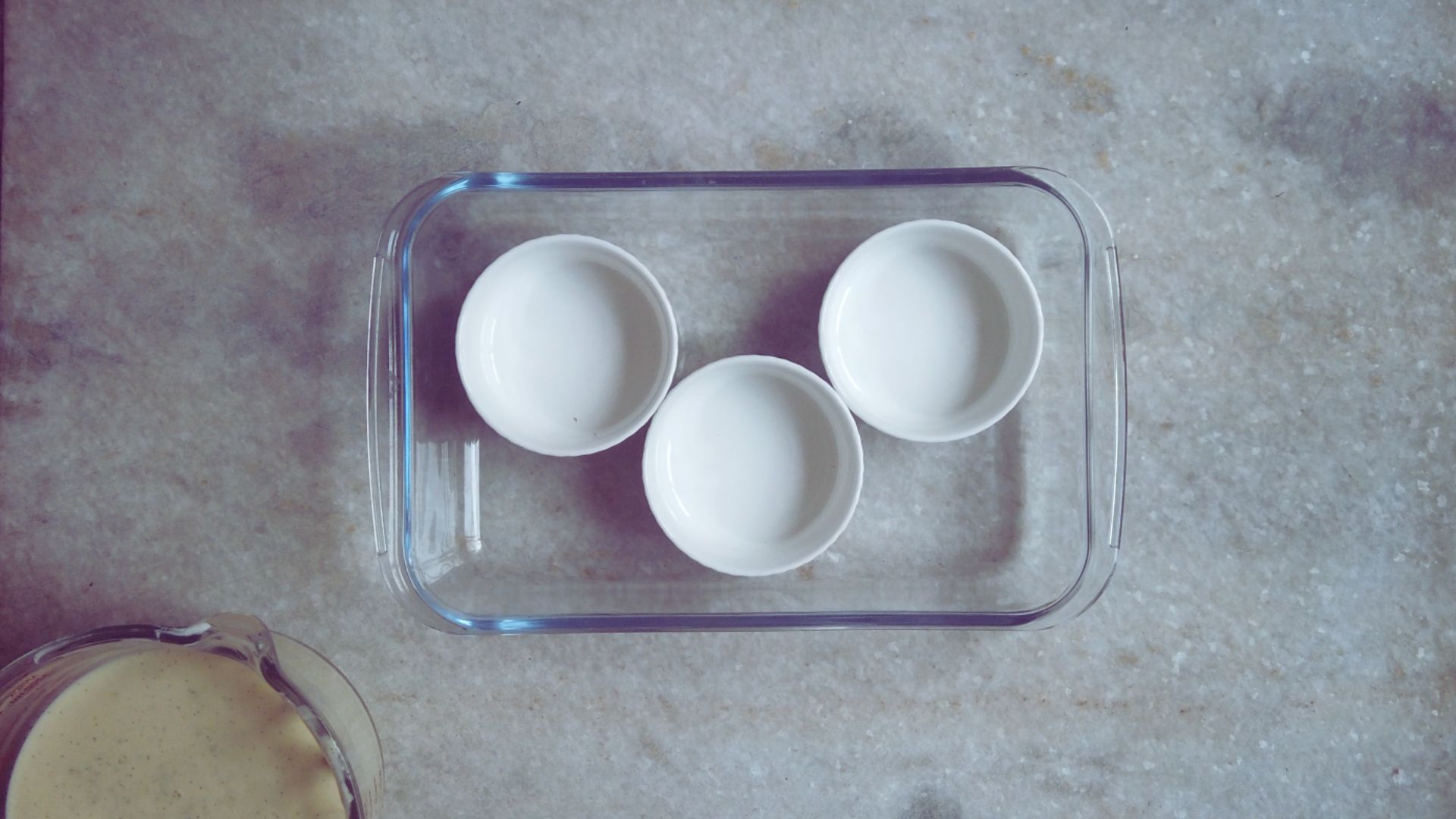
- Step 6: Preheat the oven @325°F. Place empty ramekins in a deep baking pan.
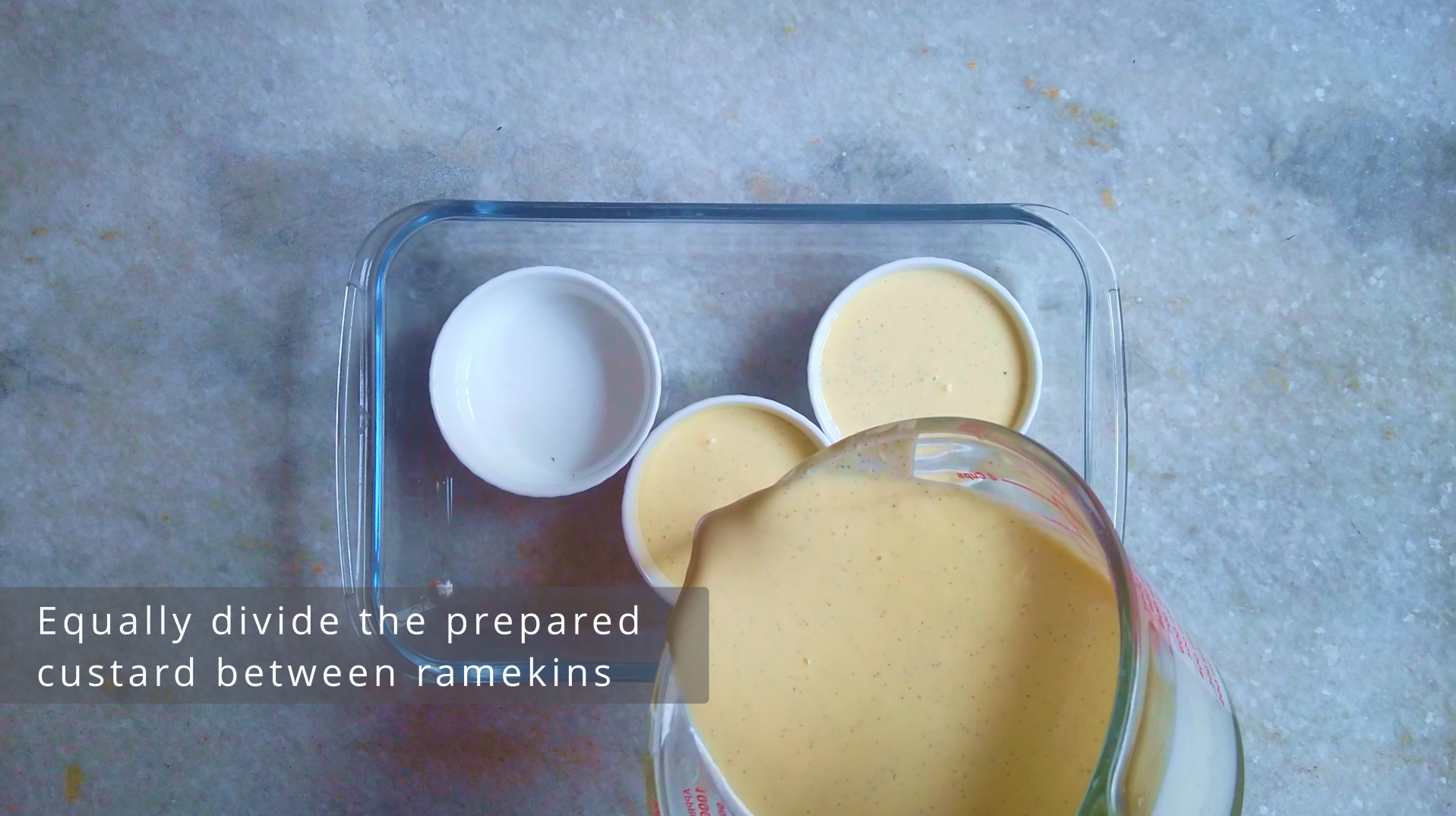
- Step 7: Equally divide the prepared custard between ramekins. Pour boiling water to the baking pan until it reaches halfway up the sides of the ramekins.
- Step 8: Bake in preheated oven for 35-40 minutes or until the custard is set but there is still a slight wobble when you gently give the ramekin a little shake.
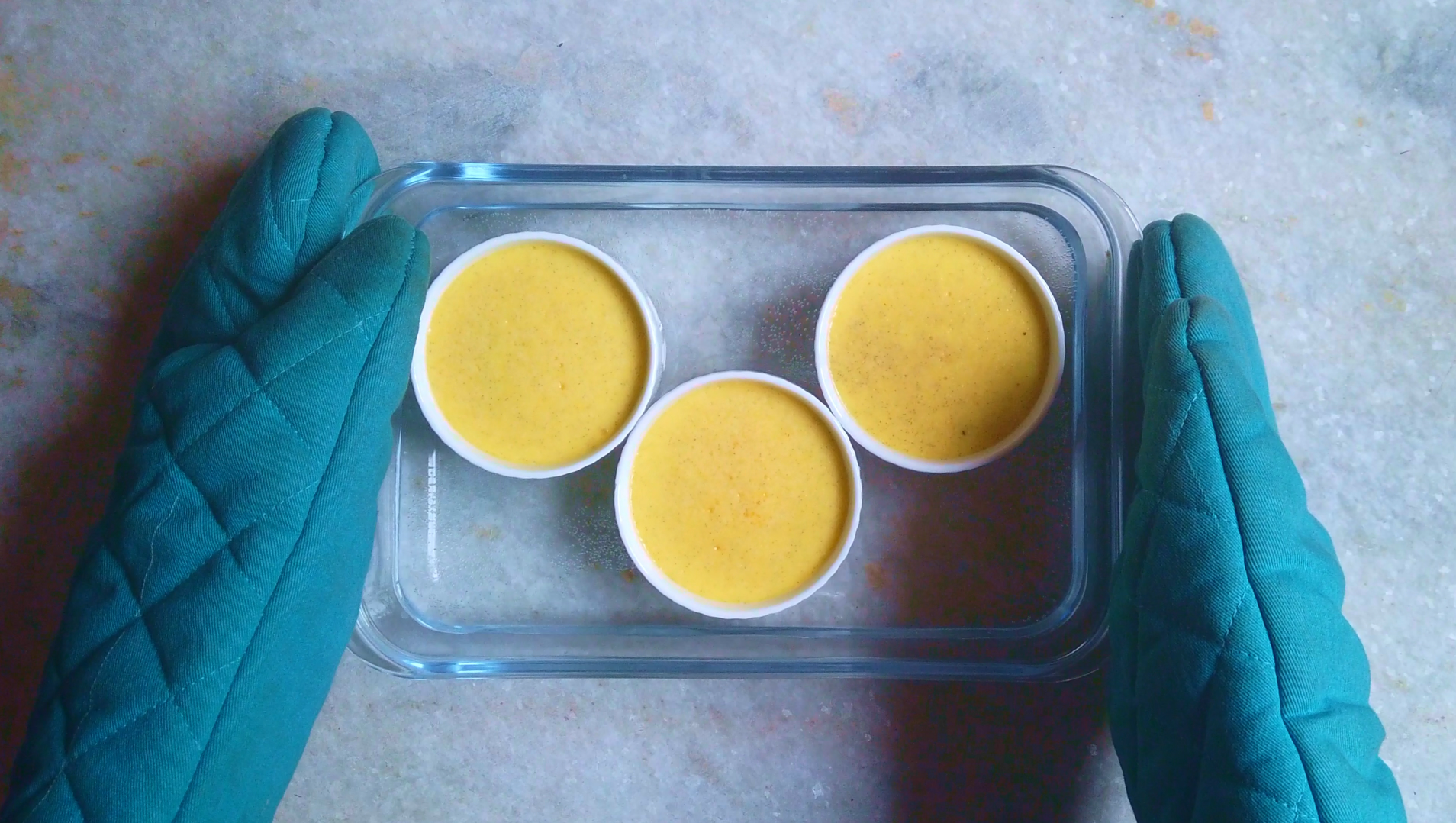
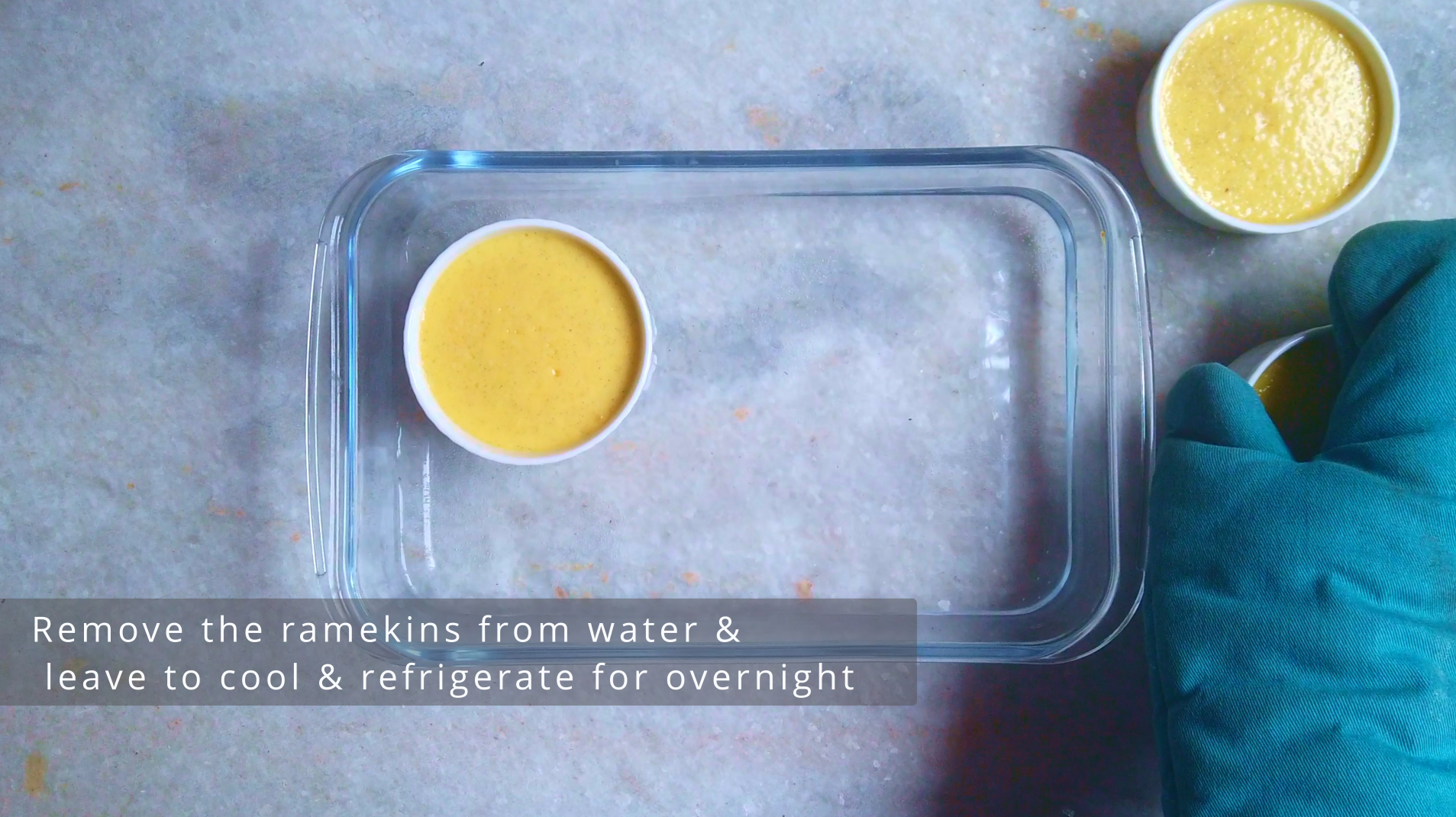
- Step 9: Remove the ramekins from water. Leave to cool, then refrigerate for overnight or up to 2-3 days.
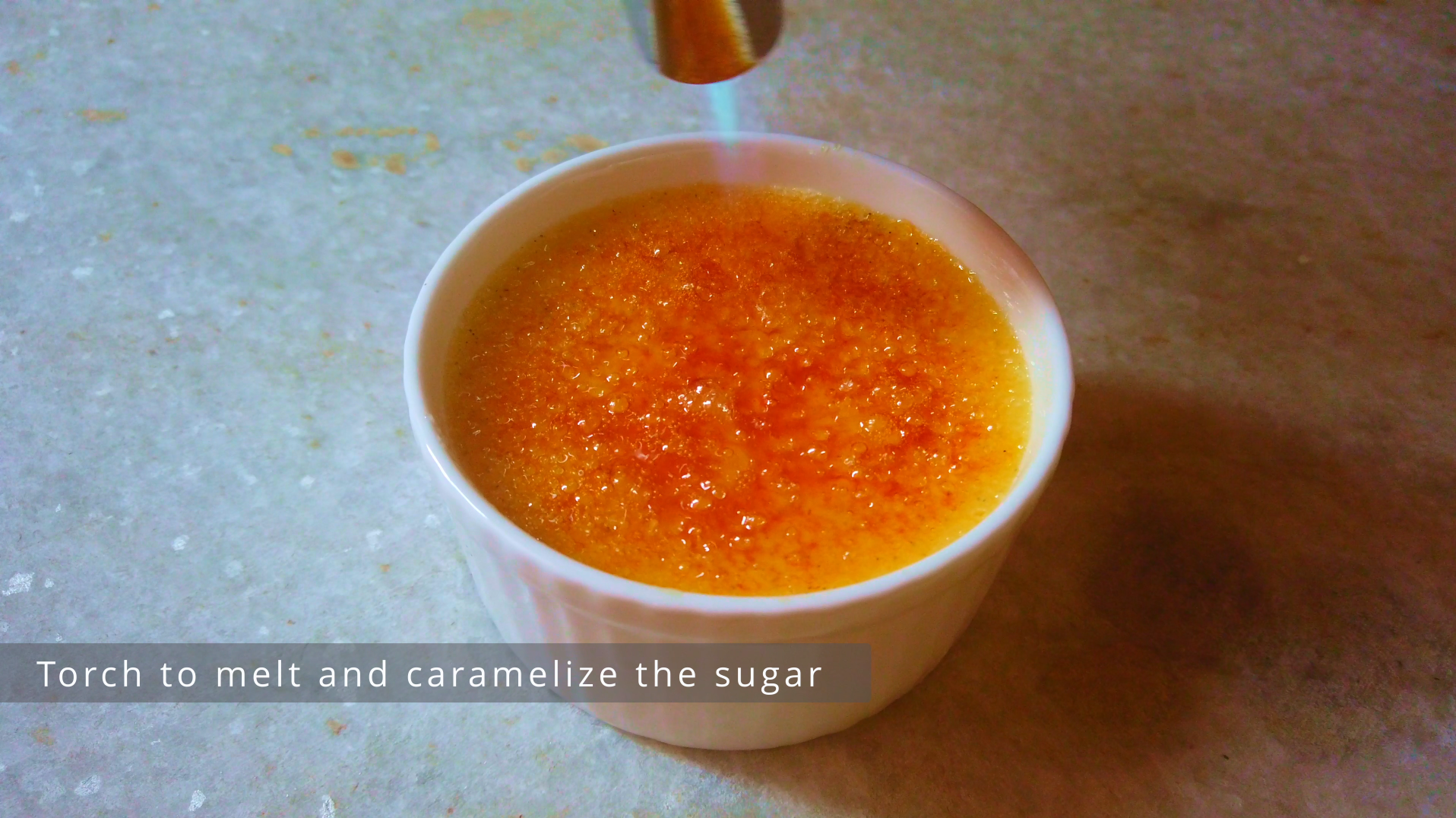
- Step 10: Sprinkle 1 tsp of castor sugar over the surface of each crème brûlée. Use a blow torch to melt and caramelize the sugar until dark amber and bubbling.
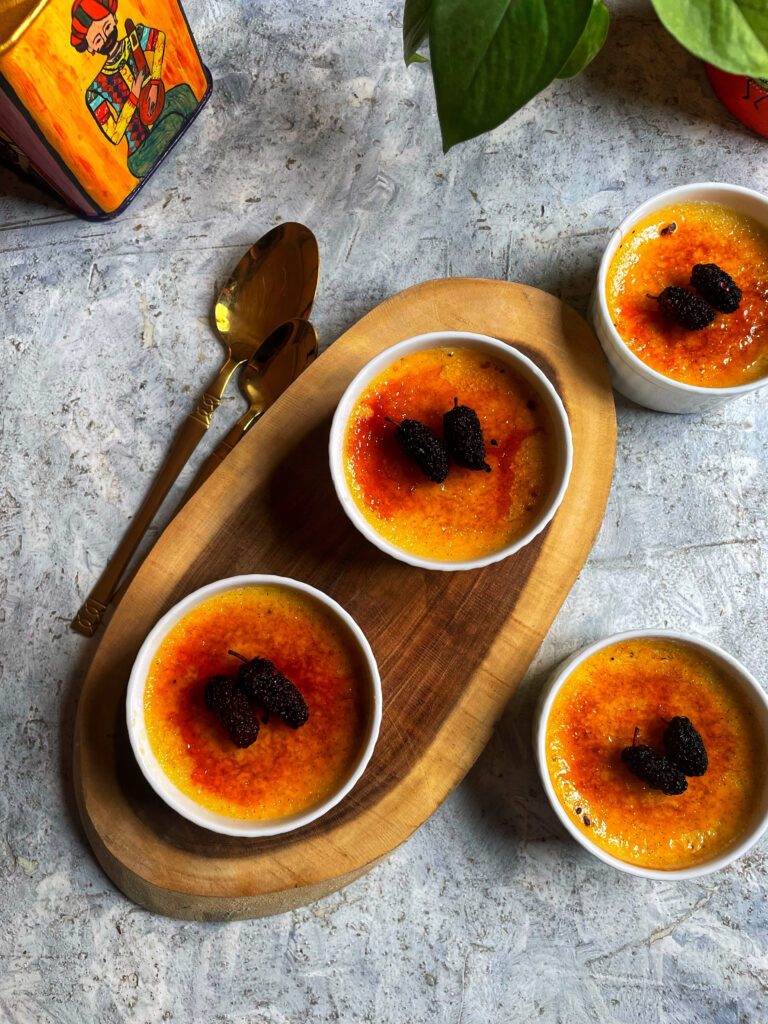
- Step 11: Top with fresh mulberry. Serve immediately. Enjoy!!
Pro Tips:
- Tempering egg yolks is key to preventing scrambled eggs in your dessert. Instead of adding hot cream directly into the yolks, begin by whisking a small amount of warm cream into the egg-sugar mixture. Gradually increase the yolk’s temperature before combining everything. This gentle process ensures a silky texture without curdling.
- Straining the custard mixture can make big difference in the final texture.
- Baking the ramekins in a hot water bath (bain-marie) helps insulate the custard and create a gentle humid cooking environment. This prevents rubbery textures and keeps the top from cracking. Use a deep baking pan, pour hot water around the ramekins about halfway up the sides and bake low and slow.
- Timing is everything. Crème Brûlée is done when the edges are firm and the centres still jiggle slightly when nudged. To be precise, aim for an internal temperature of around 170°F or 77°C, overbaking can cause a grainy texture.
- For ultimate contrast between crispy sugar top and creamy custard, serve within a couple of hours of caramelizing. The longer it sits, the more the sugar topping will soften.
- Don’t toss the leftover egg whites. Save them for meringues, macarons or angel food cake or freeze them for future use.
About Me

DEBJANI MONDAL
Welcome to Kitchenstagram, the home of delicious recipes, culinary inspiration and cooking adventures. I’m Debjani and I’m thrilled to be your guide through the wonderful world of food. I’m a self-taught professional baker, home chef, recipe developer, author of Kitchenstagram and an aspiring YouTuber.
My passion for food and cooking began at a very young age, when I would watch my mom and dad cook for me and my brother. My dad, in particular is a great cook whose culinary skills made a lasting impression on me. My dad would cook up a storm on special occasions by cooking variety of dishes, from delicious biriyani to samosa, fish fry, rasgullas and kachoris (sweet & spicy deep fried pastry with filling of lentils, meat or fish…>>>>>
FOLLOW ME
My Latest Posts
- post 1
- post 2