

Acorda à Alentejana | Portuguese Bread Soup | Alentejo Bread Soup | Kitchenstagram


As the evenings grow longer and the chili begins to settle in, there’s something comforting about revisiting an old favourite- a bowl of soup that instantly warms you from within. When the weather turns grey and the nights stretch out ahead, few things feel more satisfying than a dish that brings both warm and a touch of brightness. And for that, this zingy- herb-packed Portuguese soup, Acorda à Alentejana, fits the bill perfectly.
In traditional Alentejo bread soup coriander isn’t just a garnish, it’s at the very heart of the flavour and it creates a wonderful version that’s both hearty and fragrant. It comes together in no time, making it an ideal choice for a quick dinner on a cold evening.
Acorda, in its simplest form, is the very definition of rustic comfort. It’s one of those rare dishes that takes almost nothing- just bread, garlic, olive oil, coriander, water or stock, and egg and transforms it into something deeply satisfying. It’s the kind of food that makes you feel like you’re eating history, one spoonful at a time.
At its core, Acorda à Alentejana is a humble bread soup from Portugal’s Alentejo region, a rural area known for its golden plains, olive groves and slow pace of life. The dish evolved as a way to use up stale bread- a staple in Portuguese households that was far too valuable to waste. Over time, what began as a simple peasant meal became an emblem of regional identity and pride.
You’ll find acordas in many forms across Portugal, but the Alentejo version is the most famous. Unlike thicker bread porridges found elsewhere, the Alentejana style is brothy, aromatic and fresh, brimming with the scent of garlic and coriander. It’s so beloved, in fact, that it’s often considered the signature dish of the Alentejo and has ever been a finalist in Portugal’s “7 Wonders of Gastronomy.
The origins of acorda reach deep into Portugal’s past, tracing back to the centuries when the Moors occupied the lberian Peninsula. The Arabs brought with them a tradition of using bread in ingenious ways, not just as food, but as a thickener, a filler and a carrier of flavour. They added pieces of leftover bread to soups and stews, turning scrapes into something nourishing and substantial.
From that influence came the Portuguese acorda, whose name likely derives from the Arabic words thorda or ath-thurda, referring to a dish made with soaked bread. The technique- adding crumbled or sliced bread to broth, became a cornerstone of Portuguese cooking, especially in the South, where the Arab presence was strongest.
In medieval times, acorda was seen as a subsistence dish, a practical way to stretch ingredients and avoid waste. Yet over the centuries it gained respect and affection, evolving from humble peasant fare into one of Portugal’s culinary treasures.
Despite its deep history, the method of making acorda remains beautifully simple. The dish isn’t really cooked in the conventional sense, it’s more assembled than prepared. The magic lies in the balance of its few ingredients.
Although the Alentejo version is the most well-known, acorda takes on different personalities across Portugal. In some regions, the bread is simmered directly in the broth until it turns thick and porridge-like. In others, its left chunkier, more like a soaked salad.
Coastal areas often add seafood, giving rise to versions such as acorda de marisco (with shrimp or clams) or acorda de bacalhua (with salted cod). Thee renditions are especially popular in Lisbon and coastal towns, where fishermen’s families traditionally relied on the day’s catch to enrich their meals.
Inland, where meat was more common than fish, cooks might throw in pieces of pork ribs or sausage. Each variation tells a story of geography and necessity, what was available, what could be stretched, what could not be wasted.
Despite its deep history, the method of making acorda remains beautifully simple. The dish isn’t really cooked in conventional sense, it’s more assembled than prepared. The magic lies in the balance of its few ingredients.
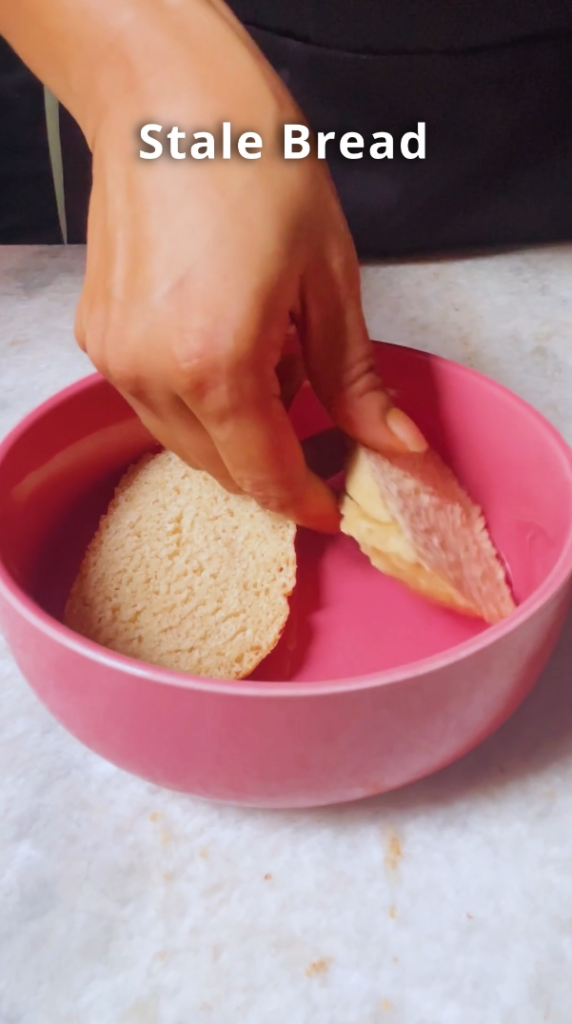
Bread, after all, has always been central to Portuguese life. From the crusty loaves of the north to the dense, golden breads of the Alentejo, it’s more than sustenance, it’s a symbol of continuity and home. Acorda celebrates that relationship in the most literal way, it takes old bread and gives it new life. Traditionally, this dish calls for Alentejo bread (Pao Alentejo), known for its firm crust and dense crumb. When it’s not available, opt for any sturdy, country-style loaf. Bread that’s a day or two old is ideal, ensuring it holds its shape and doesn’t disintegrate in the soup.
Even the texture is a matter of personal preference. Some cooks keep the bread in large slices that float in the broth, while others mash it into a thick, comforting mush. The dish invites improvisation, once you understand its fundamentals, you can make it your own.
You can prepare this dish in under 20 minutes, making it a brilliant last-minute dinner or a restorative lunch. Just make sure your bread isn’t too soft or crustless, you want it to absorb flavour without disintegrating. Country-style loaves, sourdough, or rustic peasant bread all work beautifully.
Ingredients
2 nos. Egg
Stale rustic style bread
8-10 nos. Garlic cloves
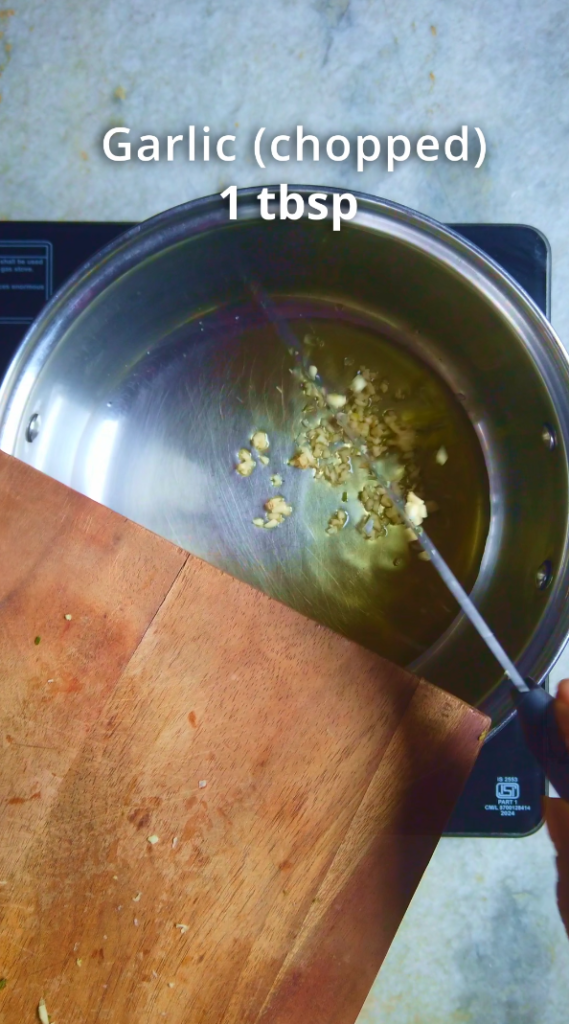
1 tbsp Garlic, chopped
1 bunch Fresh Coriander, washed
Coarse Salt to taste
1 tsp Black pepper powder
3 cups Water
1/2 cup Extra Virgin Olive Oil
Preparation
- Step 1: Separate stalks and leaves of 1/2 of the coriander. Roughly chop the coriander stalks and remaining coriander.
- Step 2: In a mortar, place garlic cloves, fresh coriander, coarse salt and black pepper powder and gently pound it until you form a paste. Add in 1/4 cup extra virgin olive oil, stir well to combine. Set aside your coriander pesto.
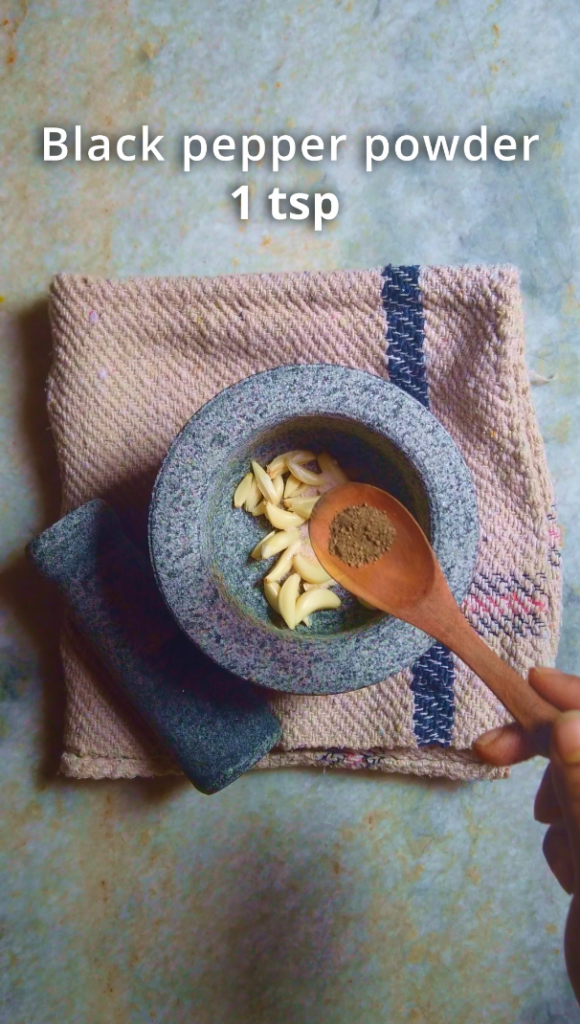
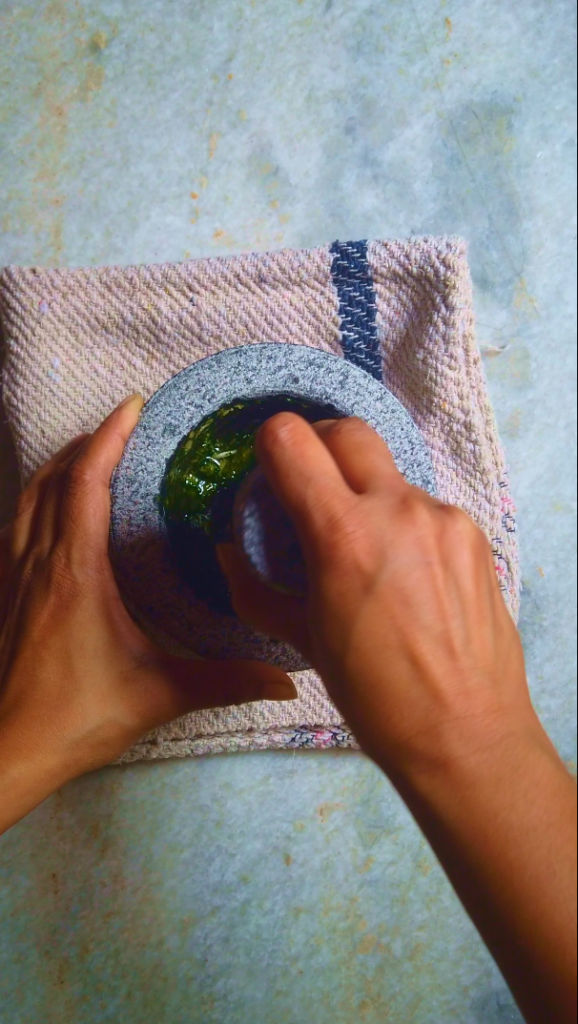
- Step 3: In a heavy bottom pot add in 1/4 cup extra virgin olive oil and chopped garlic, sautee for 1-2 minutes. Then add chopped coriander stalks and sautee for few more minutes.
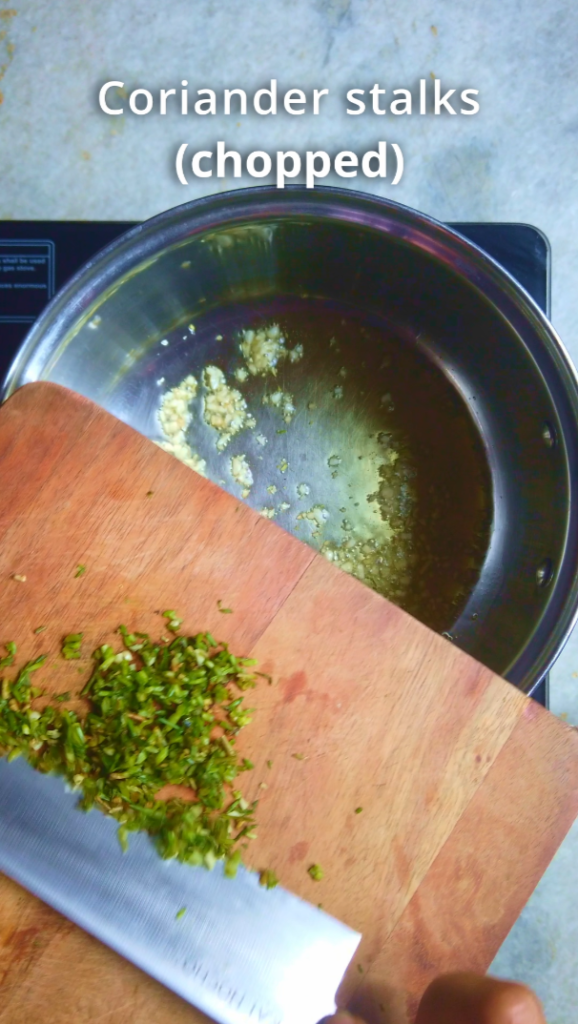
- Step 4: Add water, salt and half of the coriander pesto, stir to mix well. Bring the soup to a boil, cover and simmer for 8-10 minutes on medium high heat.
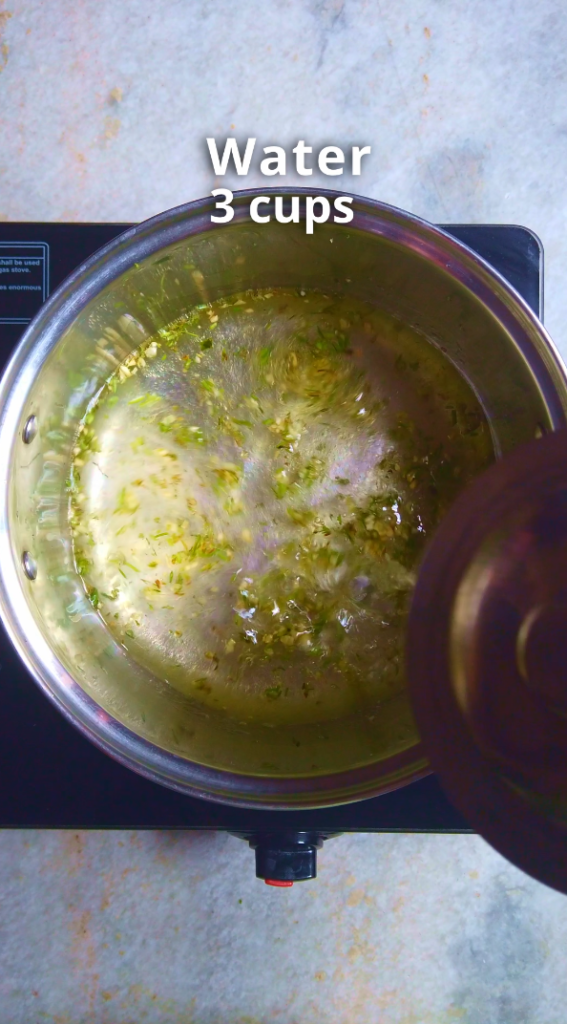
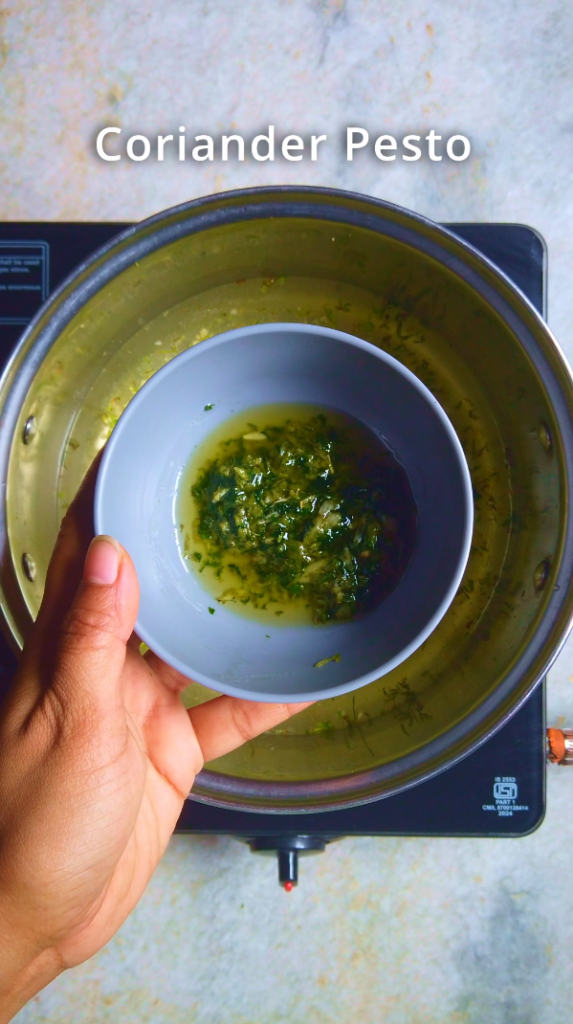
- Step 5: Then slowly add the eggs one at a time, cook until eggs are just set, for about 1 minute. Remove from heat and set aside.

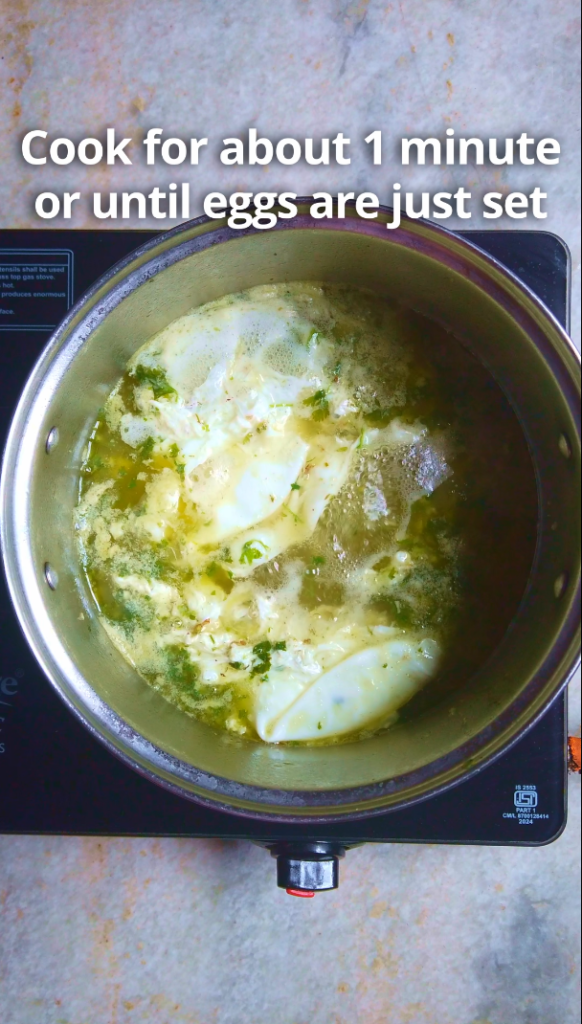
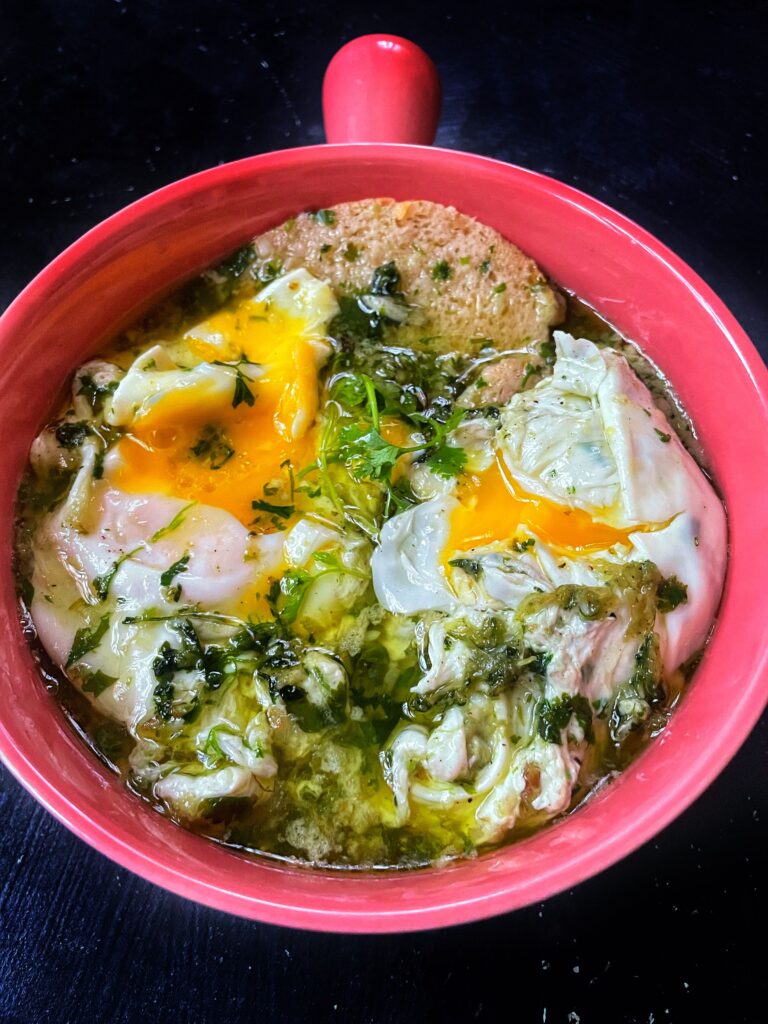
- Step 6: Cut the bread into slices. In a serving bowl, place the sliced bread and ladle some hot soup over the bread. Top with poached egg and drizzle some coriander pesto and garnish with fresh coriander.
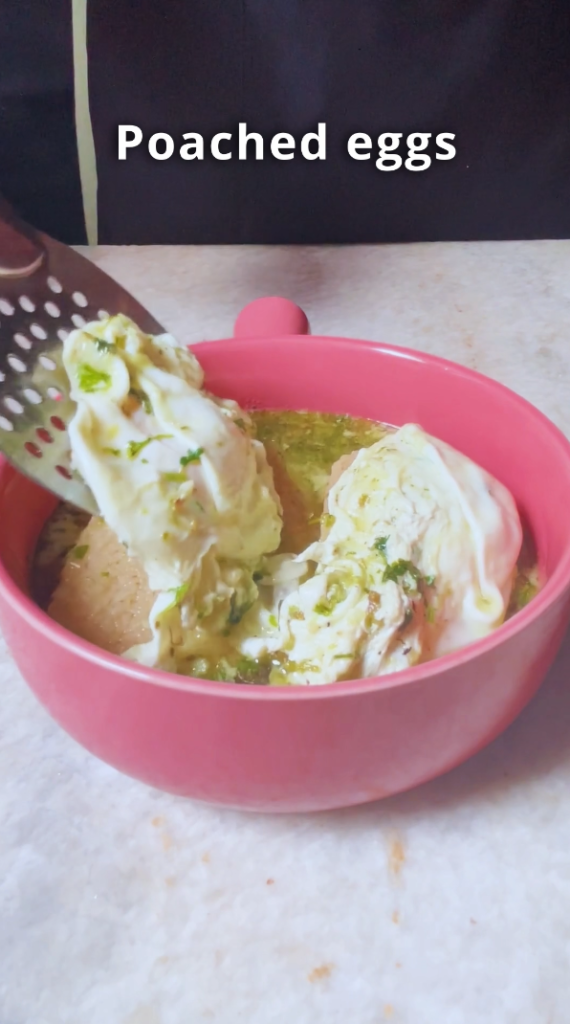
- Step 7: Serve hot immediately. Enjoy!!
About Me

DEBJANI MONDAL
Welcome to Kitchenstagram, the home of delicious recipes, culinary inspiration and cooking adventures. I’m Debjani and I’m thrilled to be your guide through the wonderful world of food. I’m a self-taught professional baker, home chef, recipe developer, author of Kitchenstagram and an aspiring YouTuber.
My passion for food and cooking began at a very young age, when I would watch my mom and dad cook for me and my brother. My dad, in particular is a great cook whose culinary skills made a lasting impression on me. My dad would cook up a storm on special occasions by cooking variety of dishes, from delicious biriyani to samosa, fish fry, rasgullas and kachoris (sweet & spicy deep fried pastry with filling of lentils, meat or fish…>>>>>
FOLLOW ME
My Latest Posts
- post 1
- post 2
- Step 7: To serve, in a glass add ice cubes, mango syrup, black salt, prepared masala, mix well. Then add ice cold water, mix well.