

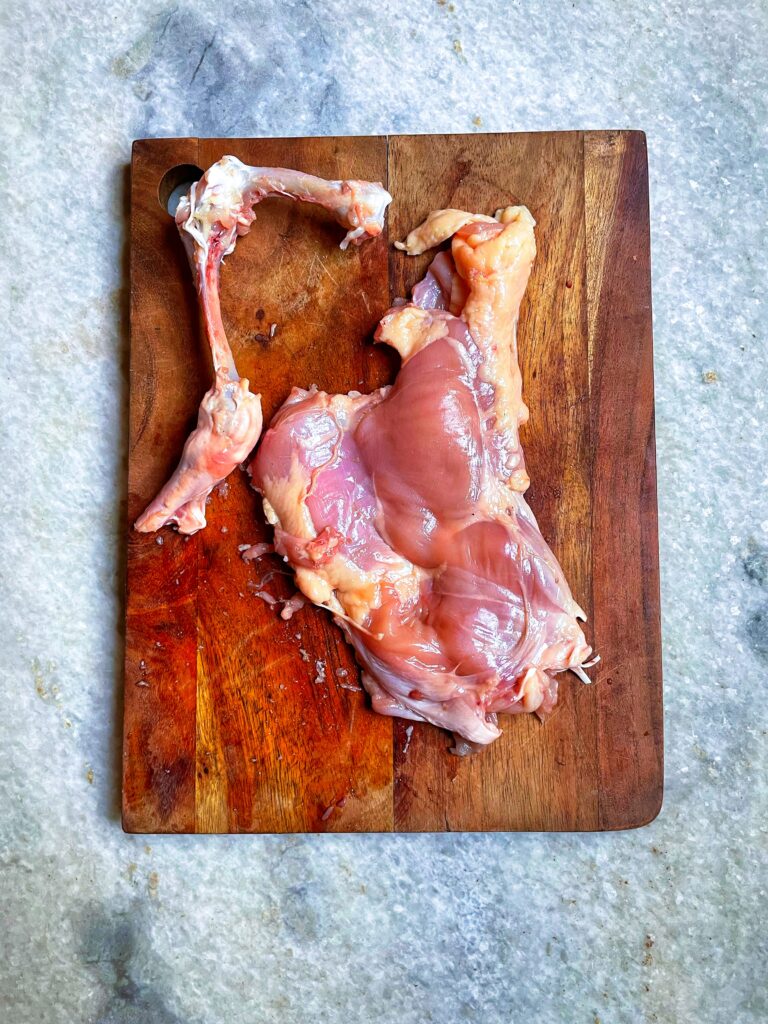
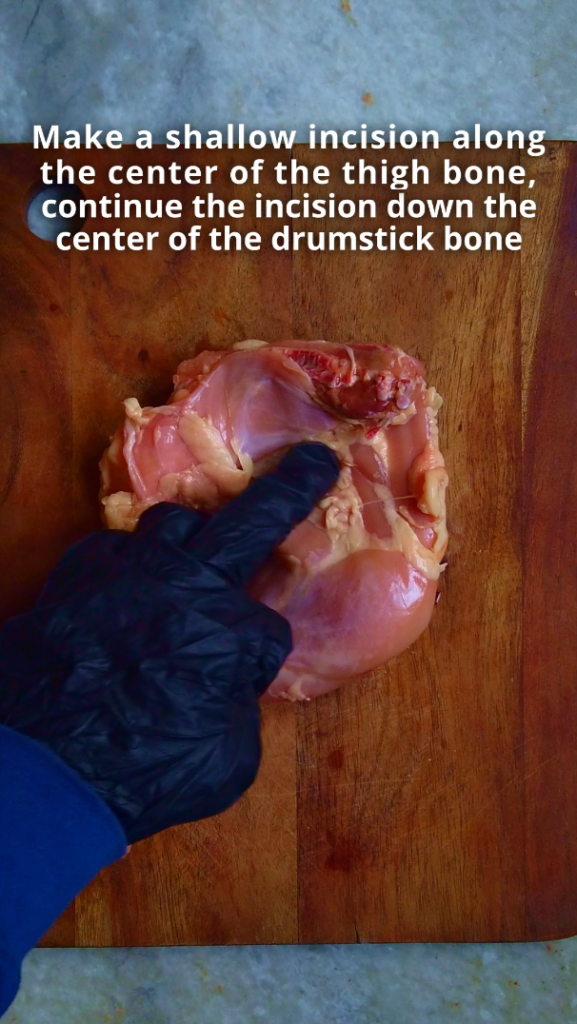
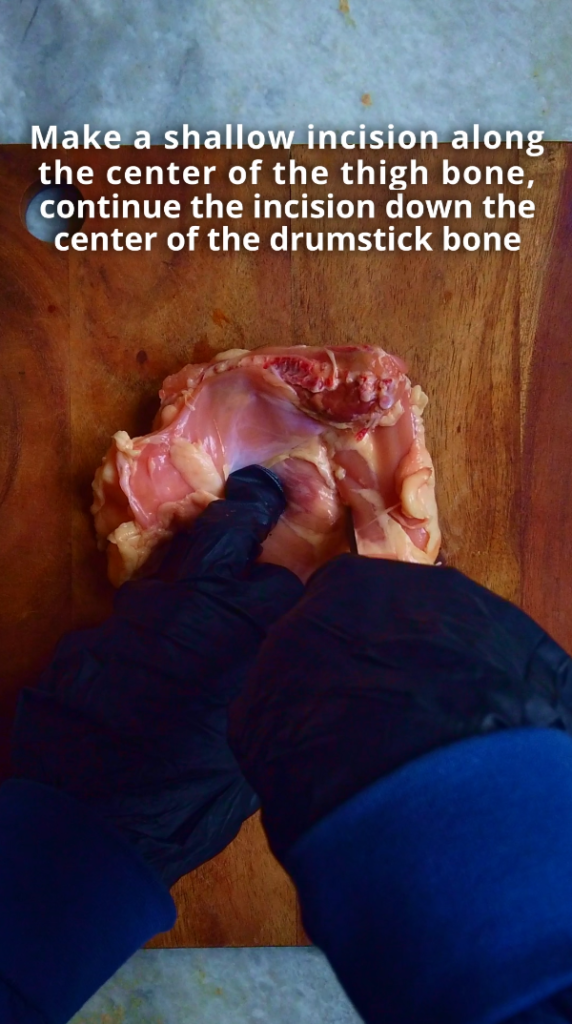
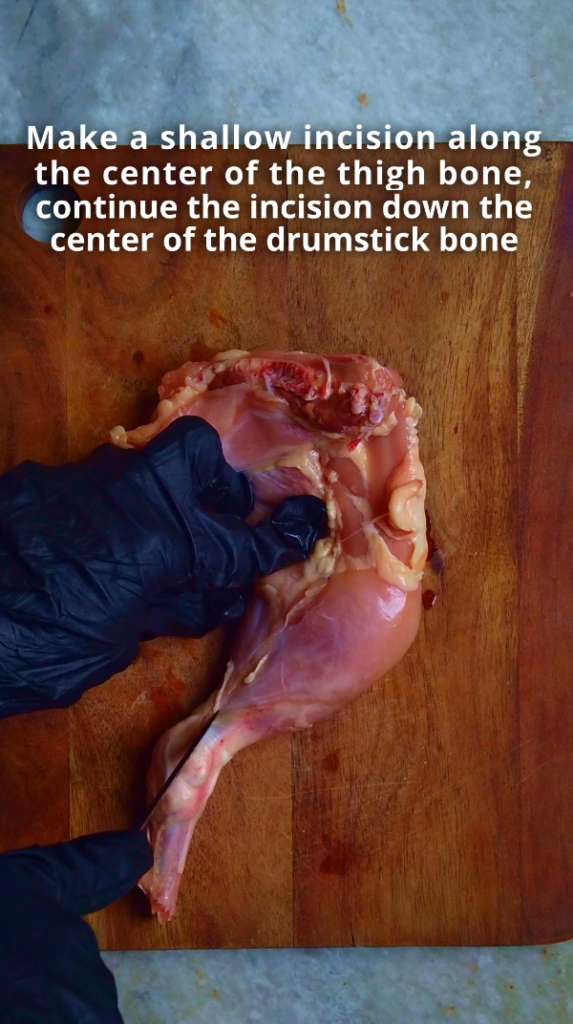
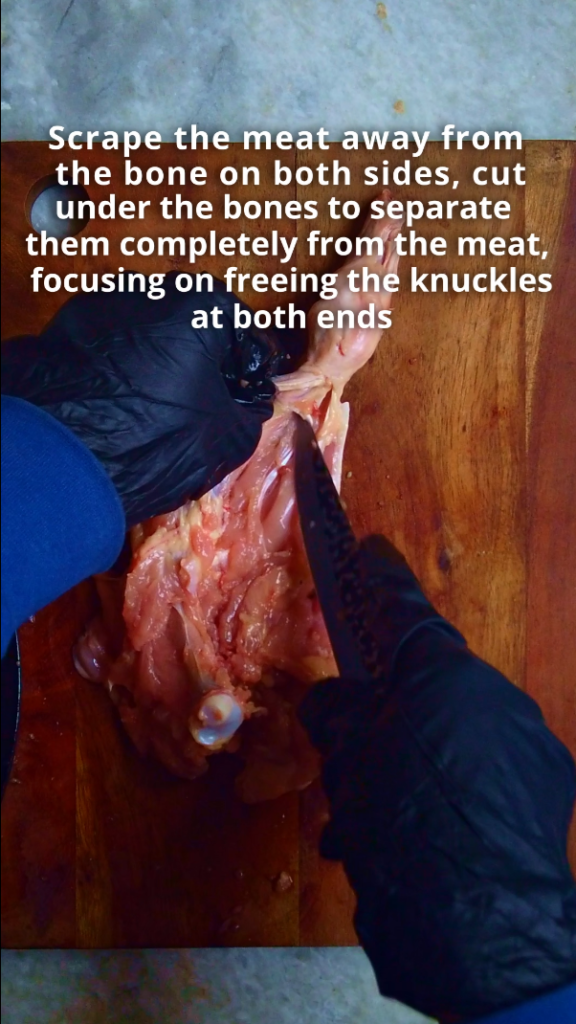
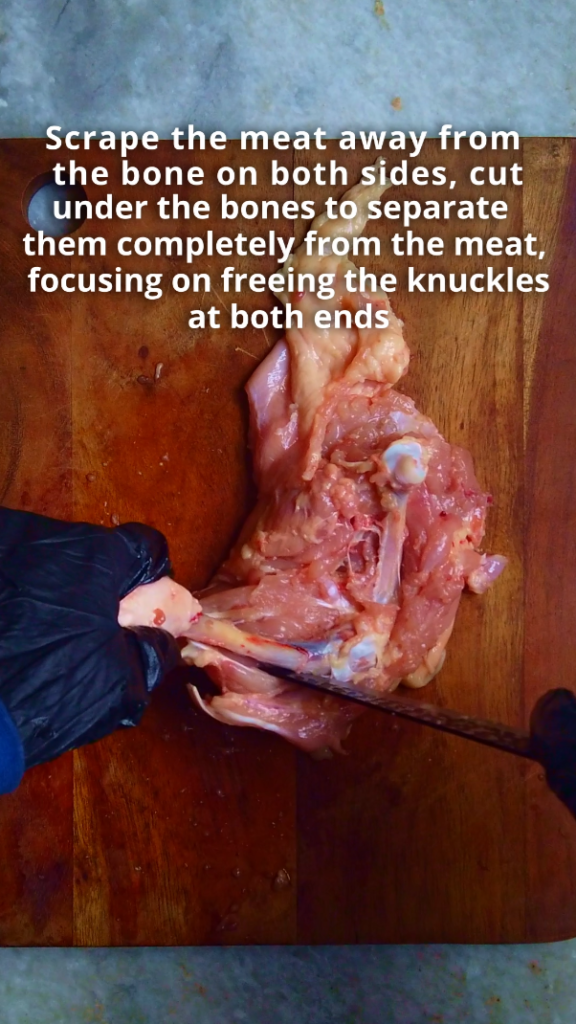
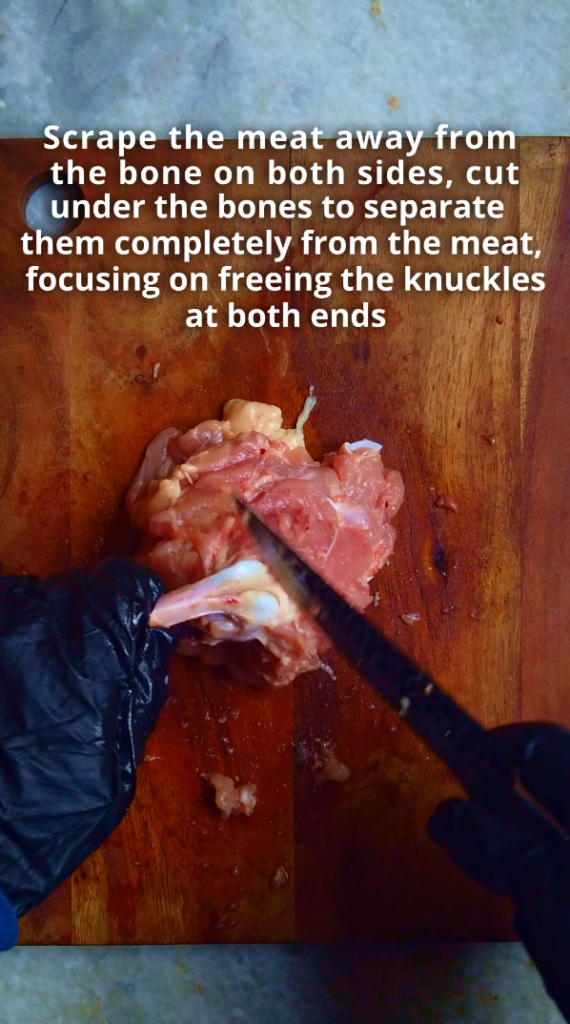

Boneless chicken thighs and legs are widely loved across Asian kitchens for their rich taste and tender texture. They stay moist-during cooking, making them perfect for a variety techniques like pan-searing, slow braising, frying and turning into crispy cutlets. Compared to chicken breast, this cut is far more forgiving and remains juicy even if cooked a little longer, which makes it a reliable choice for both beginners and experienced cooks.
Although many recipes call for boneless chicken legs and thighs, they are not always easily available at local stores. The good news is that you can prepare them ay home with a bit of patience and the right technique. Learning to remove the bones yourself not only saves money but also give you more control over the cut and portion size.
When it comes to tools, a well-shaped boning knife is ideal. A slim, slightly curved blade of medium length helps you work closely along the bone while maintaining control. The pointed tip is especially useful for navigating around the joins and tight spaces. However, if you don’t have a boning knife, other options like a pairing knife or fillet knife can also do the job effectively. Even a standard chef’s knife can be used with the right grip, though it may feel less precise due to its size. With a steady hand and a sharp blade, deboning chicken at home becomes a simple and satisfying kitchen skill.
1 no. Whole Chicken Leg
DEBJANI MONDAL
Welcome to Kitchenstagram, the home of delicious recipes, culinary inspiration and cooking adventures. I’m Debjani and I’m thrilled to be your guide through the wonderful world of food. I’m a self-taught professional baker, home chef, recipe developer, author of Kitchenstagram and an aspiring YouTuber.
My passion for food and cooking began at a very young age, when I would watch my mom and dad cook for me and my brother. My dad, in particular is a great cook whose culinary skills made a lasting impression on me. My dad would cook up a storm on special occasions by cooking variety of dishes, from delicious biriyani to samosa, fish fry, rasgullas and kachoris (sweet & spicy deep fried pastry with filling of lentils, meat or fish…>>>>>
FOLLOW ME